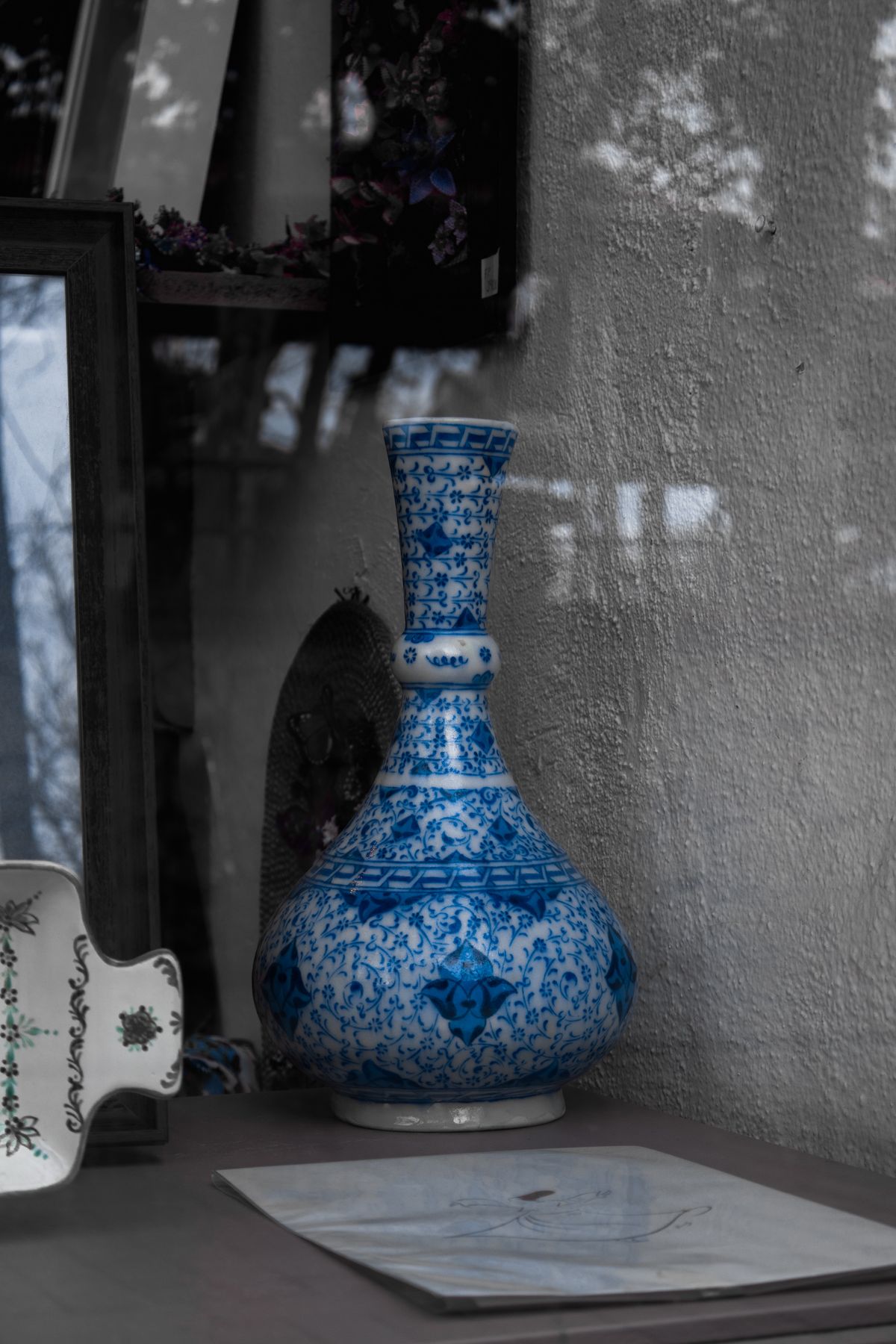
Turquoise Blue Pottery
Multan's signature Kashigari - cobalt and turquoise glazed pottery - in vases, plates, jars and tiles, the same craft that clads the city's famous blue-domed shrines.

Est. 1972 · Qila Kohna Qasim Bagh
The House of Art in the heart of old Multan
For over 50 years, Nigar Khana has kept the crafts of Multan alive - turquoise blue pottery, camel-skin lamps, mosaic glass, carved wood and bone jewellery - inside a subterranean domed chamber opposite the shrine of Hazrat Shah Rukn-i-Alam.
About Nigar Khana
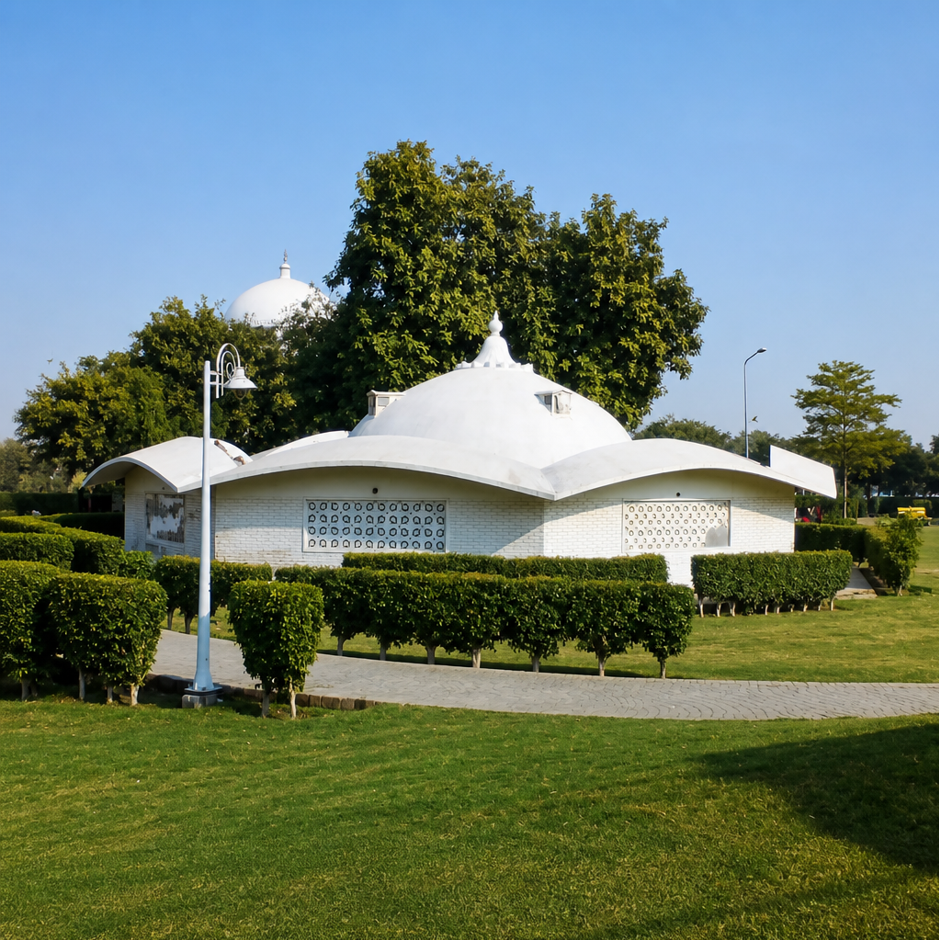
Nigar Khana - literally "the house of pictures" or house of art - sits opposite the mausoleum of the Sufi saint Hazrat Shah Rukn-i-Alam in Multan. Visitors descend a flight of steep steps roughly twenty feet below ground into a cross-shaped, domed chamber lit only by the northern entrance and three small dome windows.
The chamber itself is far older than the gallery. It is believed to have been built around 1720 as the Barood Khana - the gunpowder and weapons store - of Qila Kohna Qasim Bagh, likely raised by Sher Afgan, the Naib Nazim of Multan during the reign of Muhammad Shah (1719–1748). It was badly damaged during the British siege of Multan in 1848.
In 1972 the government converted the historic armoury into a handicrafts and souvenir house, and for more than five decades Nigar Khana has been a fixture on Multan's cultural map - mentioned in foreign guidebooks and visited by heads of state, ambassadors and writers from around the world.
“Many artisans contribute here; each masters their own art with a distinctive approach, and that is what draws visitors every day.”
- Abdul Waheed, proprietor of Nigar Khana
The gallery is run by Abdul Waheed, who inherited it from his father, the carpenter and potter Abdul Hameed, and has managed it for around three decades.
What we keep alive
Six living traditions, made and sold under one 300-year-old dome.
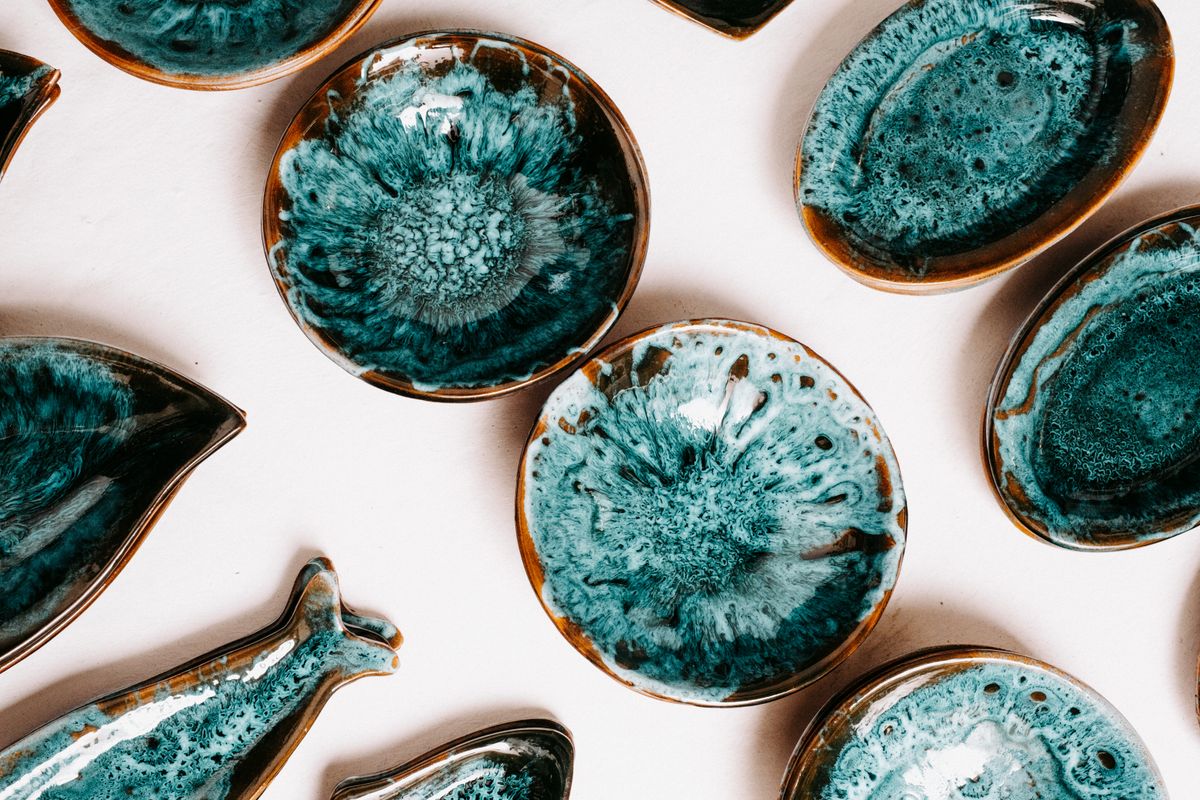
Multan's signature Kashigari - cobalt and turquoise glazed pottery - in vases, plates, jars and tiles, the same craft that clads the city's famous blue-domed shrines.
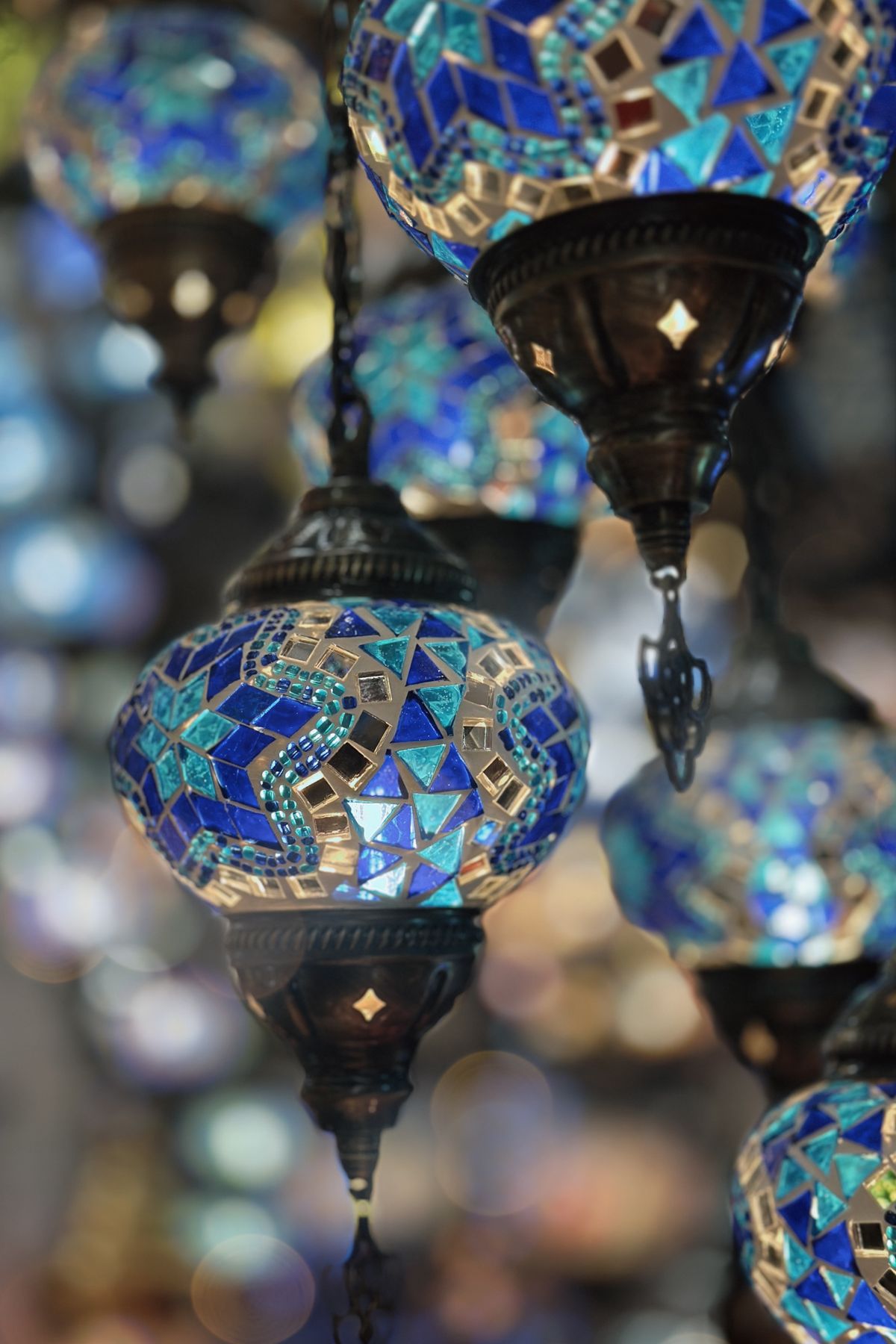
Painted camel-skin lampshades and vases - a rare art the shop says survives almost nowhere else - casting warm, patterned light.
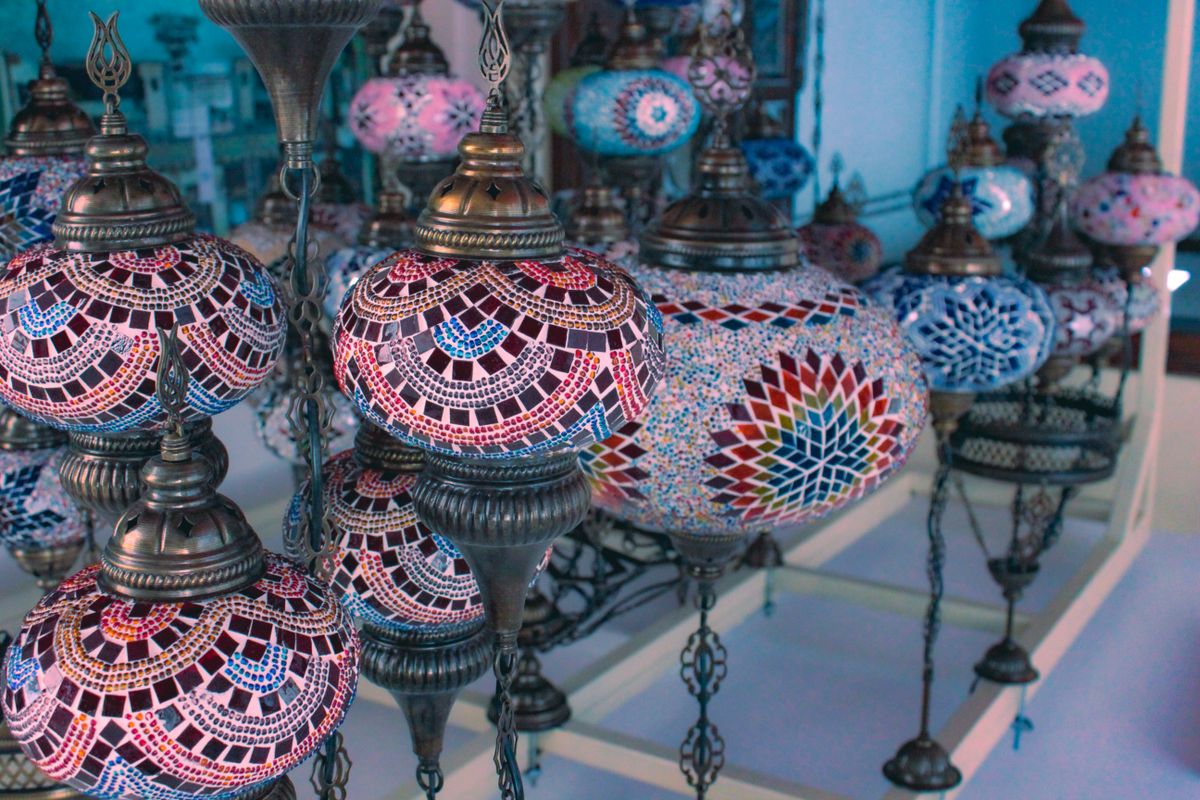
Hand-set mosaic glass lamps and decorative pieces, each fragment cut and fitted by hand into glowing geometric patterns.
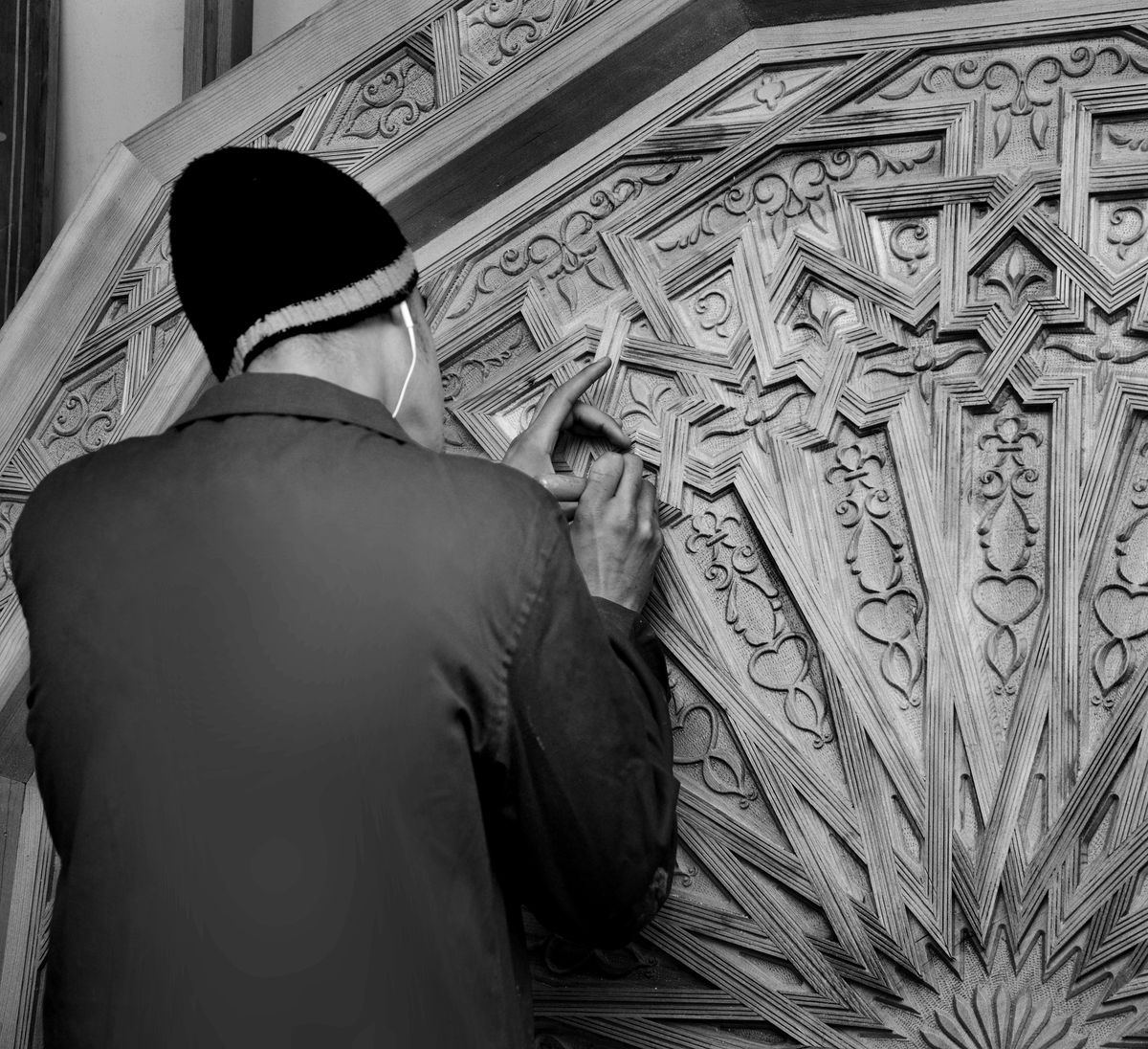
Carved wooden souvenirs, boxes and decoration pieces worked by hand in the tradition of Multan's woodcraft.
Delicate camel-bone jewellery and carved bone ornaments - fine, pale and intricately worked keepsakes.
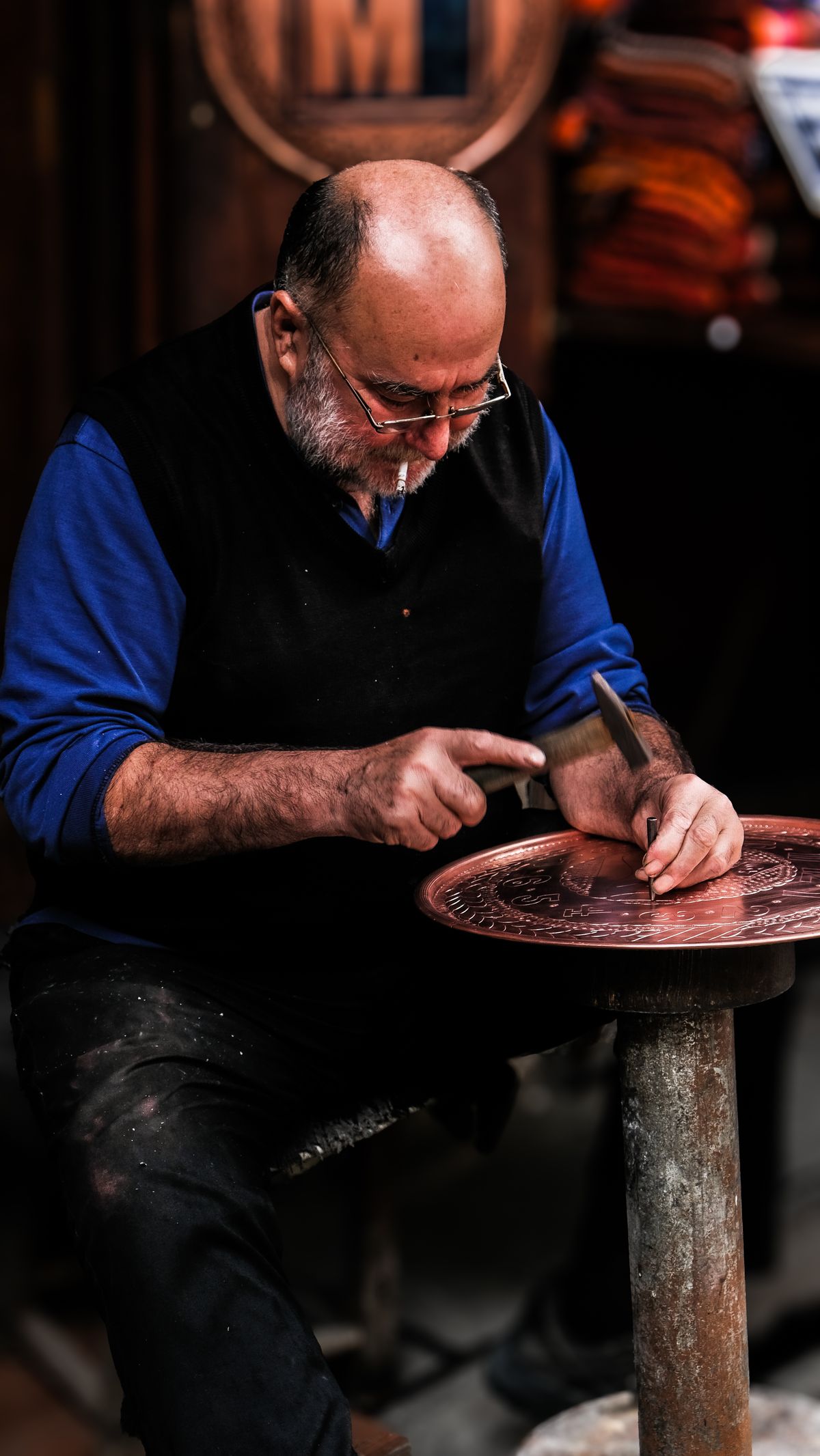
Engraved metalware, clay figurines and traditional musical instruments round out the shop's living collection of Multani craft.
Curated Exhibition Series
A travelling programme of handicraft, heritage and trade exhibitions staged across Multan - from the cobalt of its blue-pottery workshops and camel-skin naqashi lamps to the tilework of Shah Rukn-e-Alam - assembled by Nigar Khana with its civic and craft partners, and crowned by our own inaugural show, Neel-o-Noor.

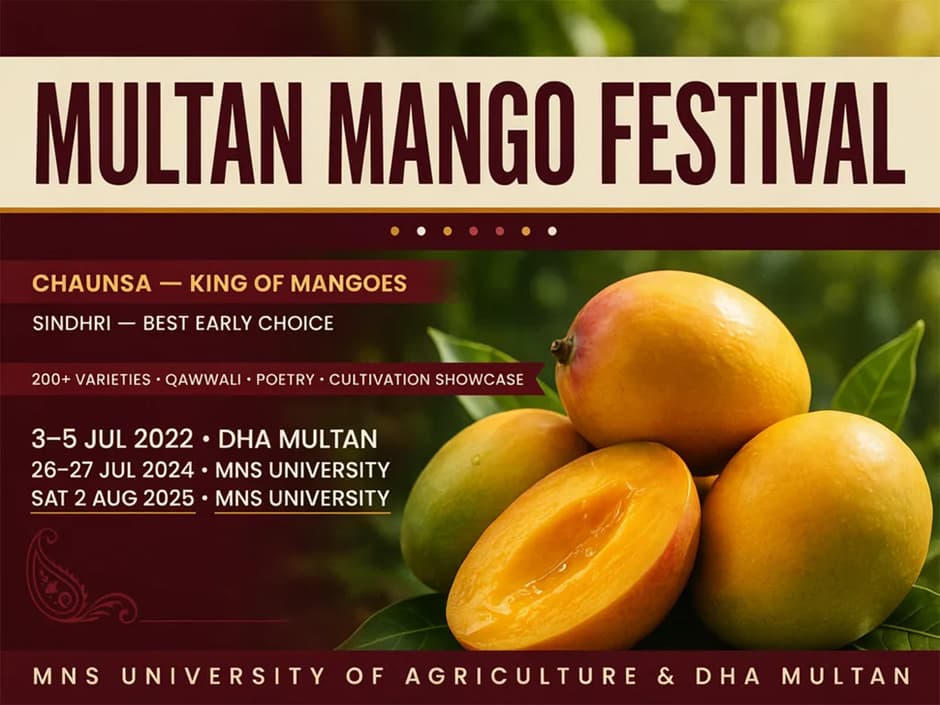
The city's flagship summer celebration of the king of fruits: more than 200 varieties - Chaunsa, Sindhri, Langra, Anwar Ratol and beyond - are laid out by growers, with mango-dish and eating competitions, a children's drawing contest, qawwali and poetry nights, and research showcases on cultivation and export.
MNS University of Agriculture & DHA Multan
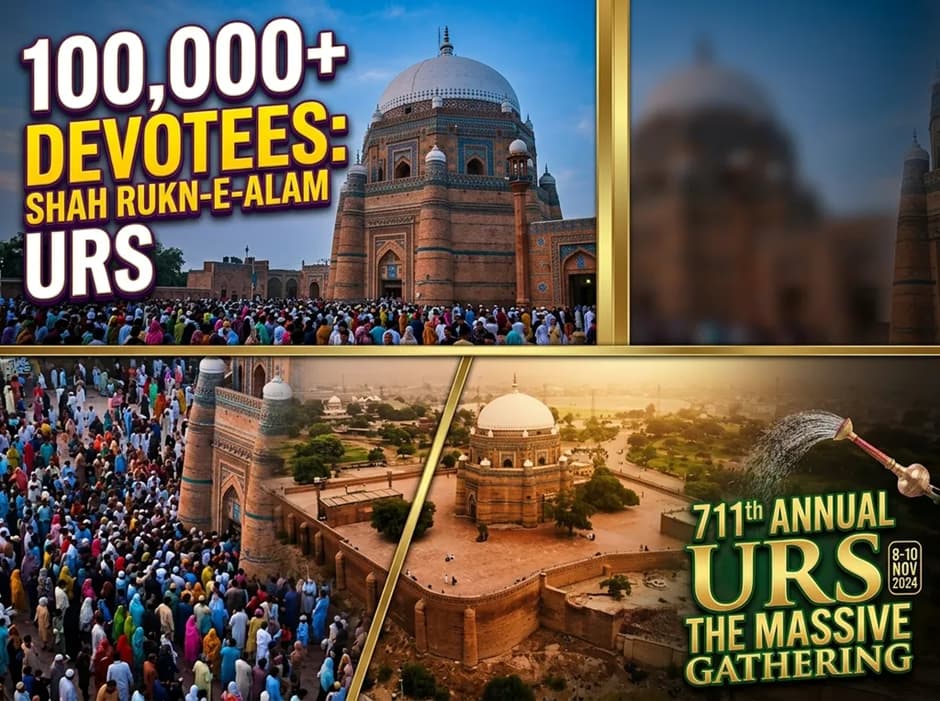

Multan's largest spiritual gathering: over 100,000 devotees converge on the 14th-century Tughluq-era mausoleum inside Multan Fort for three days of ritual, beginning with the ceremonial rose-water washing of the shrine, followed by conferences, prayers and qawwali. Dates follow the Islamic lunar calendar, moving roughly 11 days earlier each year.
Tomb of Shah Rukn-e-Alam, Multan Fort
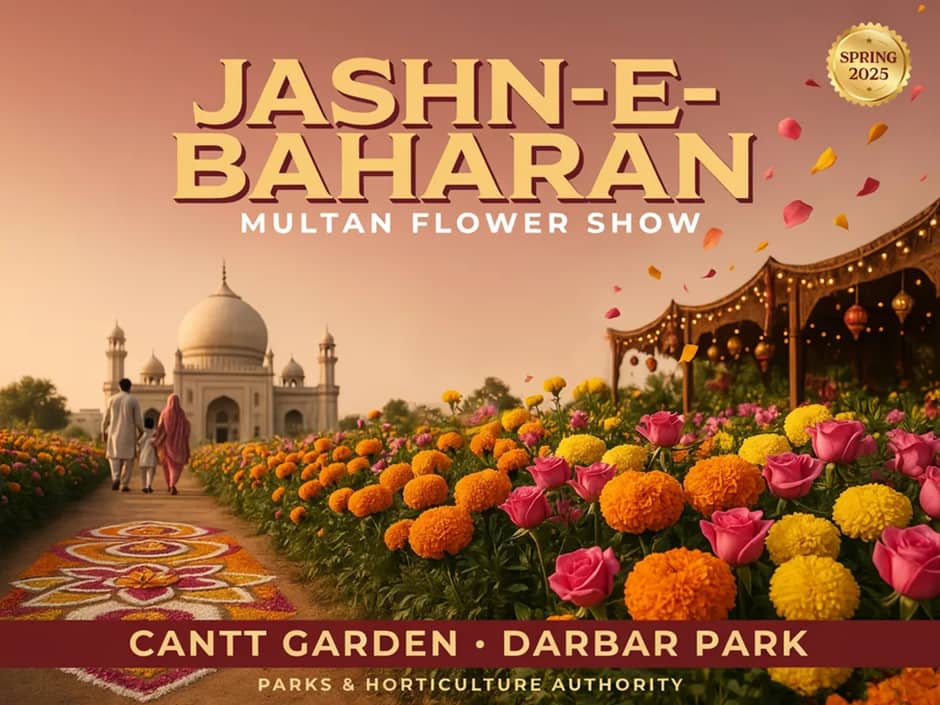
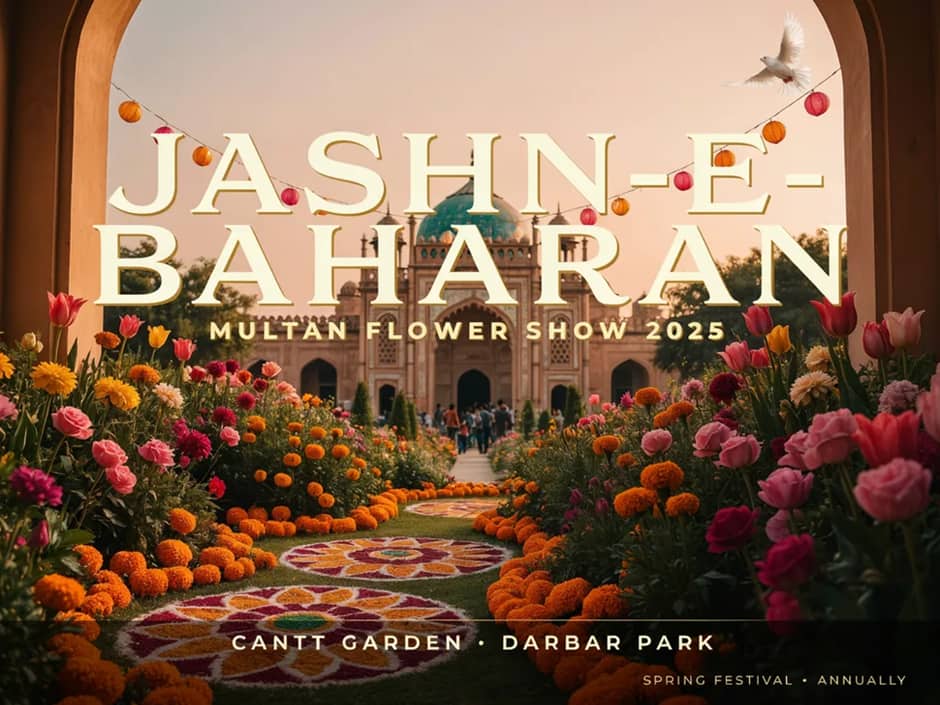
Every March, the spring festival fills Multan's parks with flower beds, stalls and family shows. Cantt Garden (Company Bagh) is the city's traditional home of flower exhibitions, and in 2025 the show also bloomed at Darbar Park inside Multan Fort, beside the shrines.
Cantt Garden & Darbar Park, Multan Fort
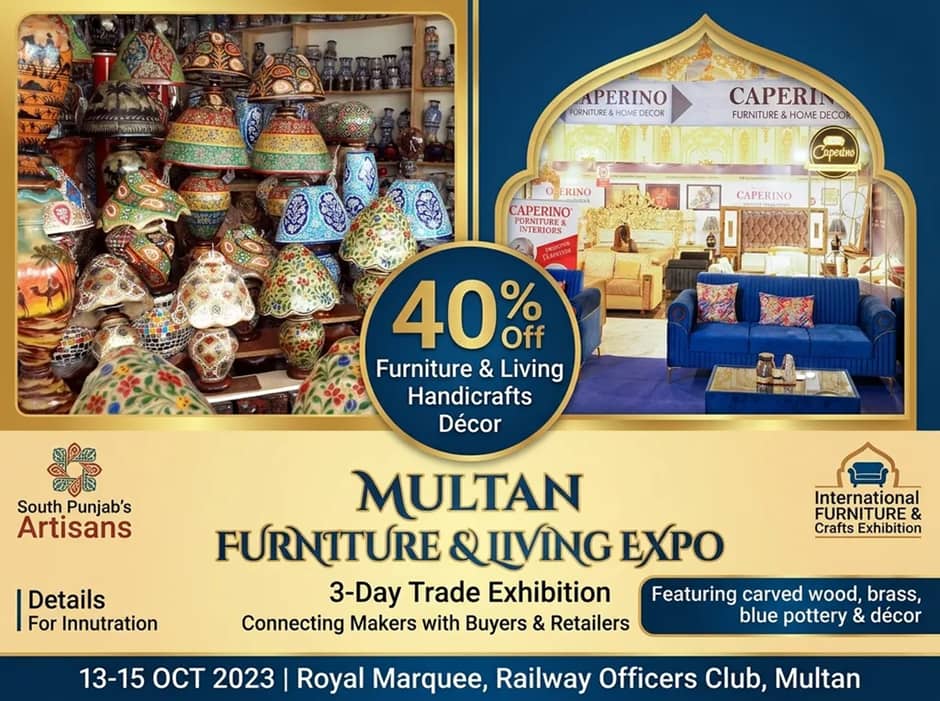
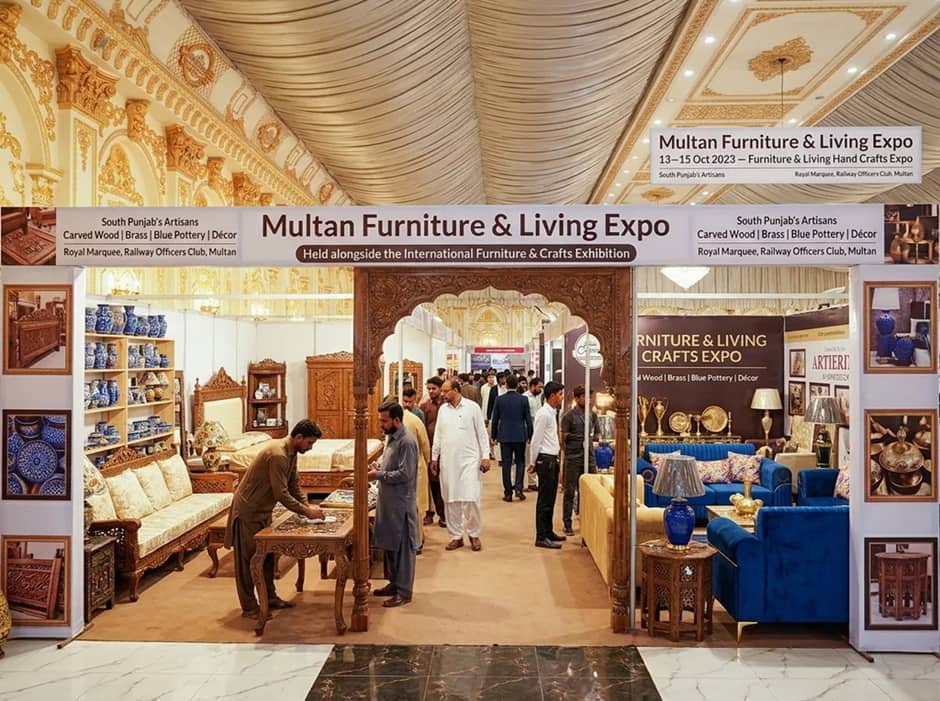
A three-day trade fair pairing South Punjab's furniture makers with home-living and handicraft stalls - carved wood, brass, blue pottery and décor - giving Multan's workshops a modern showroom under one marquee and connecting them with buyers and retailers.
Royal Marquee, Railway Officers Club, Multan

A mall-floor shopping showcase bringing together clothing brands, jewellery, décor and lifestyle stalls with local textile artisans - Multani embroidery, block prints and khussa footwear - in the city's modern retail heart at Centro Plaza.
Centro Plaza Shopping Mall, Multan

A study-abroad fair where UK universities and admissions consultants meet South Punjab's students for on-the-spot counselling and last-minute applications - part of the recurring circuit of overseas-education expos hosted at Multan's hotels.
Faletti's Grand Hotel, Multan
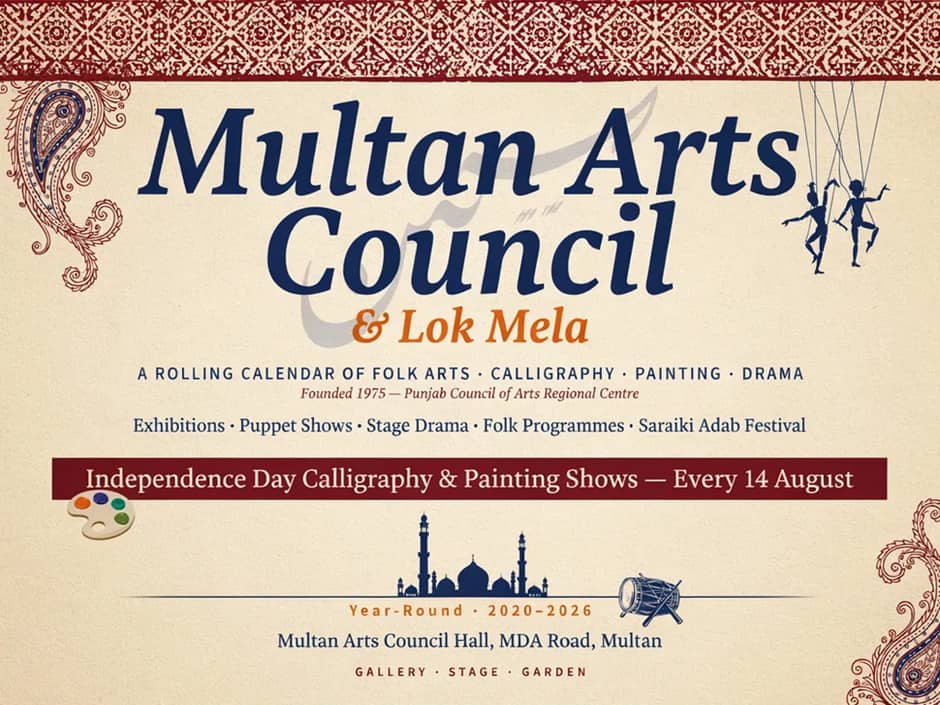
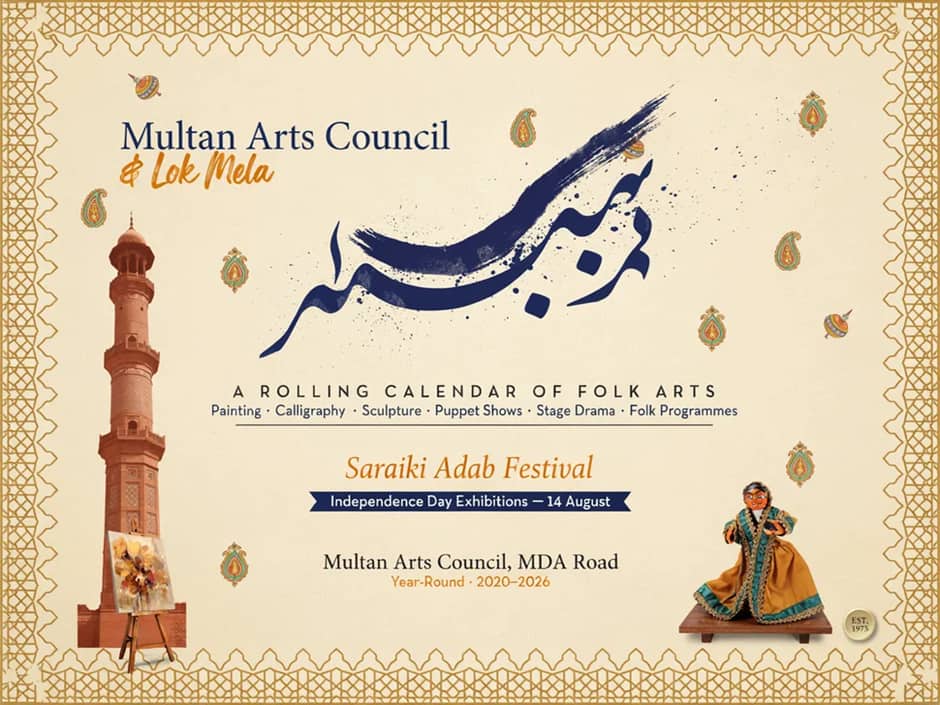
Founded in 1975 as the Punjab Council of Arts' regional centre, MAC's hall, art gallery, stage and garden host the city's painting, calligraphy and sculpture exhibitions, puppet shows, stage drama, Lok Mela folk programmes and the Saraiki Adab Festival - a rolling calendar rather than a single date.
Multan Arts Council, MDA Road
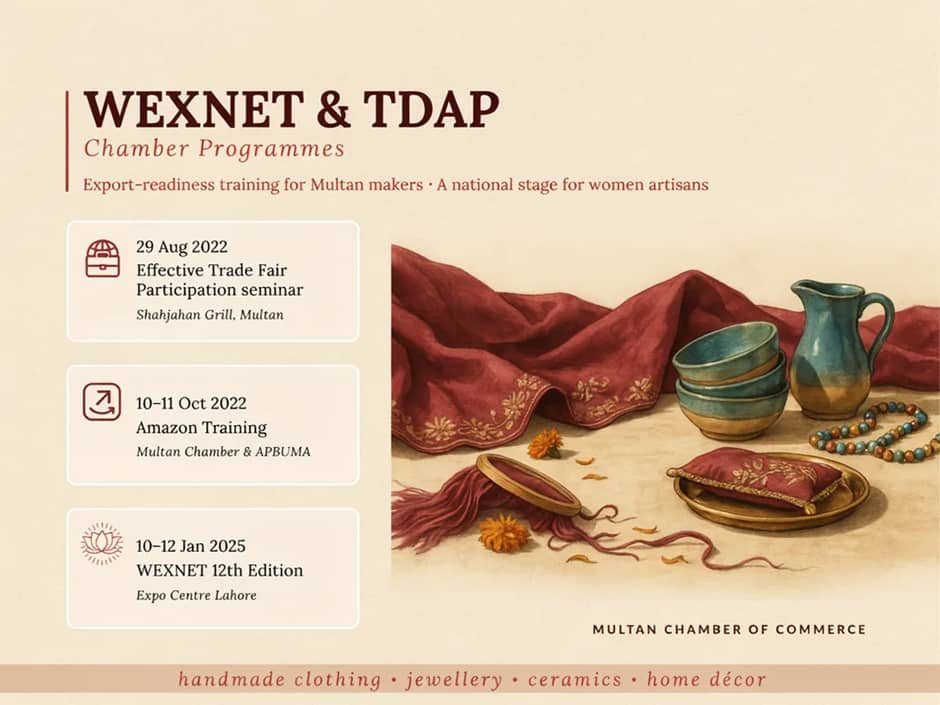
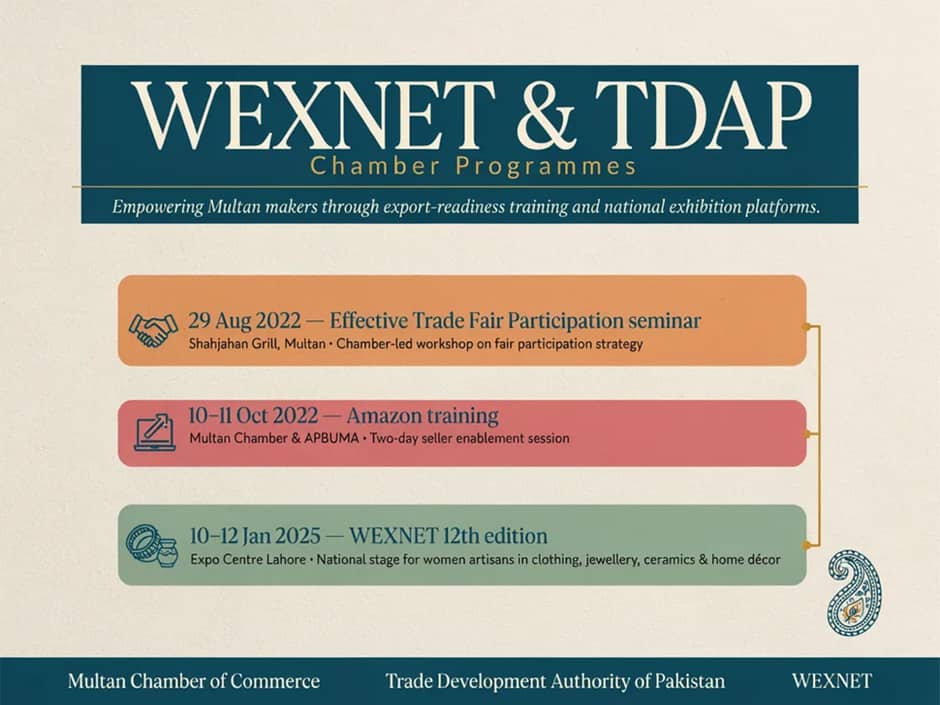
The Trade Development Authority of Pakistan and the Multan Chamber run export-readiness training for the city's makers, while WEXNET - Pakistan's largest women-exclusive exhibition - gives Multani women artisans a national stage for handmade clothing, jewellery, ceramics and home décor.
Multan Chamber of Commerce · Expo Centre Lahore
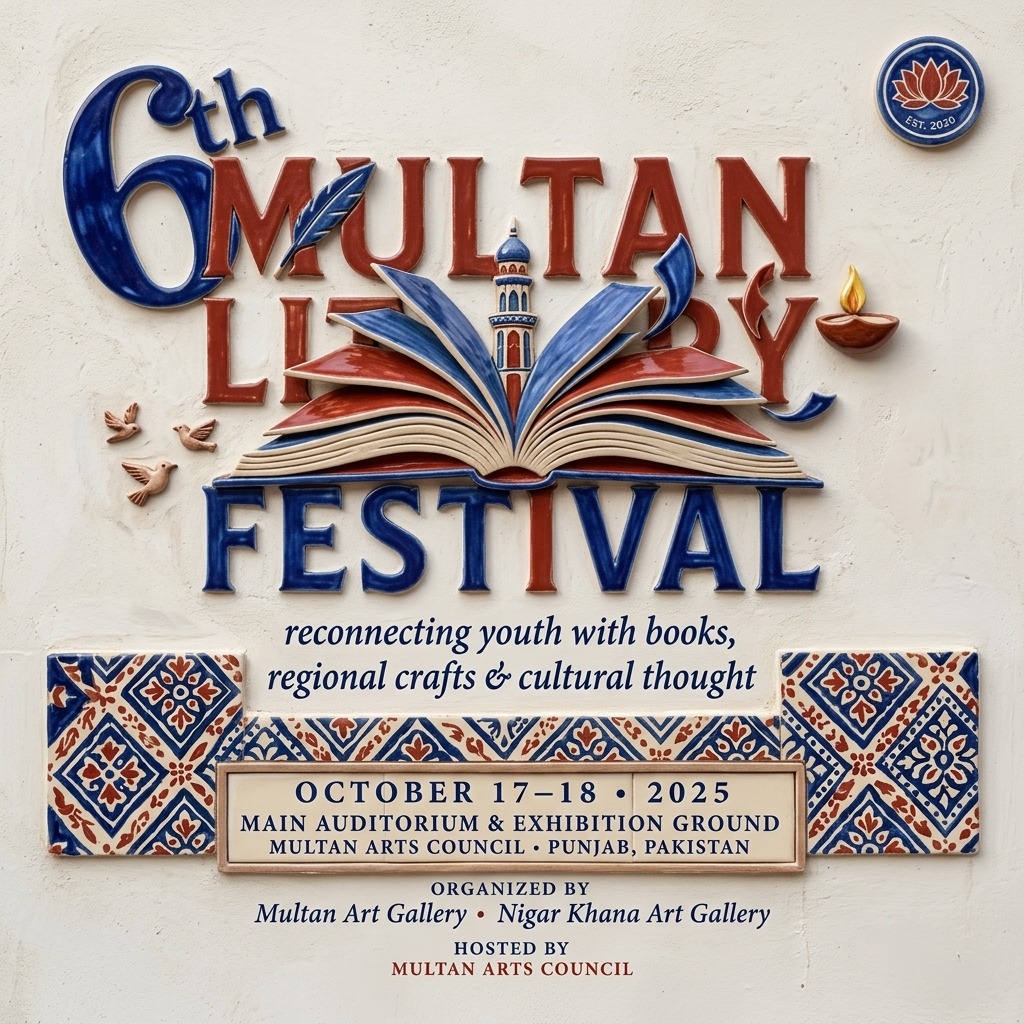
Two days of readings, panels and craft stalls in the Multan Arts Council auditorium and its exhibition ground, built around a simple aim - putting books back in young hands and setting them beside the region's making traditions. Saraiki and Urdu poetry sessions, publisher and bookseller tables, student debates and cultural-thought panels run indoors, while the exhibition ground carries blue pottery, camel-skin naqashi and calligraphy stands so writers, readers and artisans share the same ground. Organised by Multan Art Gallery with Nigar Khana Art Gallery, hosted by the Multan Arts Council.
Main Auditorium & Exhibition Ground, Multan Arts Council, MDA Road
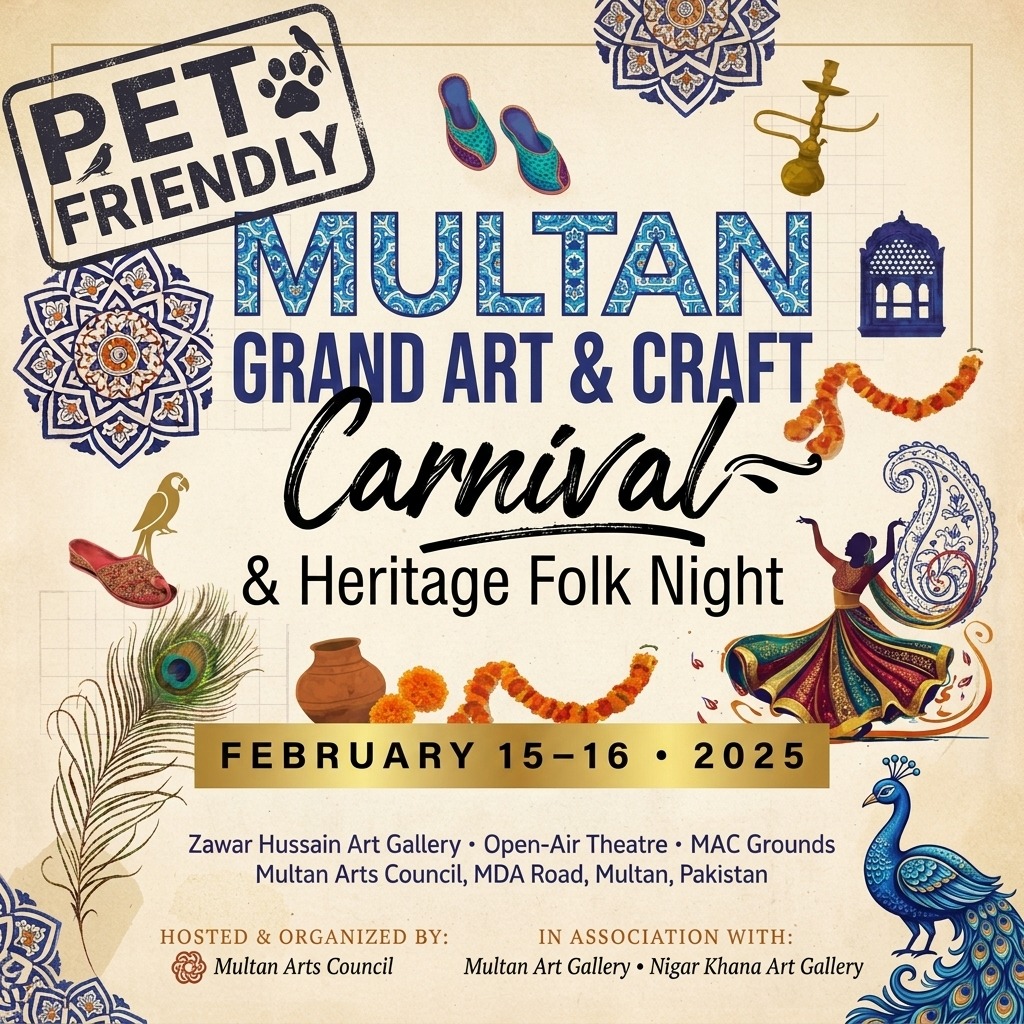
A weekend carnival spread across the Zawar Hussain Art Gallery, the open-air theatre and the Multan Arts Council grounds: craft stalls of blue pottery, khussa, embroidery and camel-skin lamps by day, a gallery hang of regional work, and a heritage folk night on the open-air stage with dhol, alghoza and Saraiki song once the light goes. Families are welcome and so are their animals - the carnival is run pet-friendly throughout the grounds. Organised by the Multan Arts Council with Multan Art Gallery and Nigar Khana Art Gallery.
Zawar Hussain Art Gallery · Open-Air Theatre · MAC Grounds, MDA Road
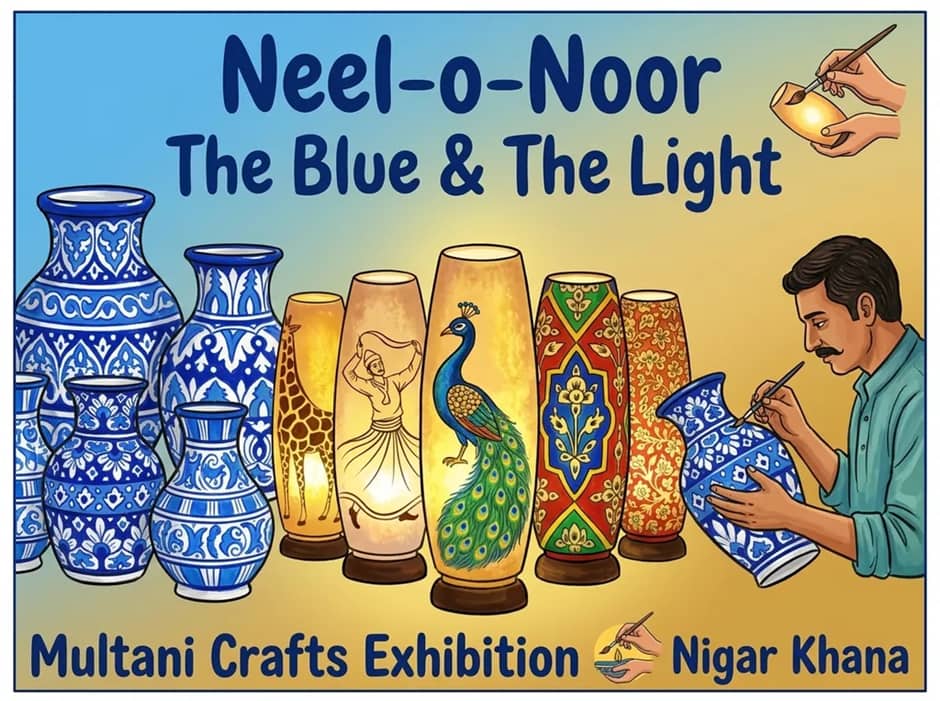
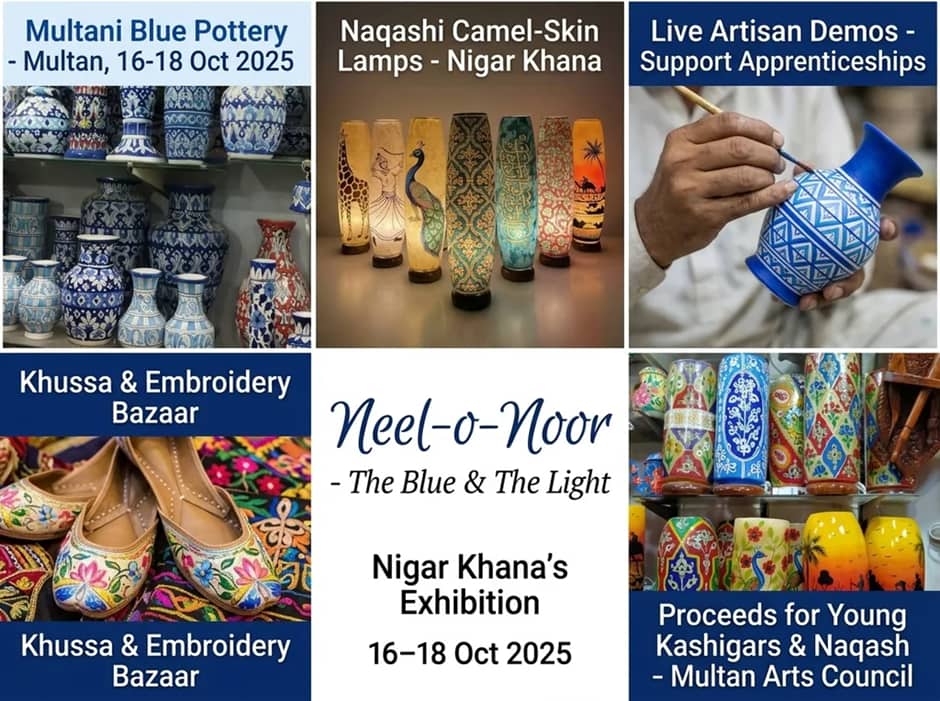
Neel is the cobalt of the kiln; noor is the glow through painted camel skin. Nigar Khana's own flagship show unites the two signature crafts of Multan in a single lamp-lit gallery: Kashigari vessels and tiles fired in the city's workshops, naqashi lamps from the old-city ateliers, with live artisan-at-work demonstrations, a khussa-and-embroidery bazaar corner, and an evening "lighting of the hundred lamps". Proceeds support apprenticeships for young kashigars and naqash.
Multan Arts Council gallery, MDA Road
Gallery
Scenes of the city, its shrines and the crafts that fill Nigar Khana.
News & Press
How Pakistan's newspapers and cultural archives have told the story.
A photo-story walk through the underground gallery and the crafts it keeps alive.
Read the story (opens in a new tab)DAWNOn the armoury-turned-gallery, its blue pottery and camel-skin work, and proprietor Abdul Waheed.
Read the story (opens in a new tab)The Express TribuneNearly five decades of handicrafts, exhibits and antiquities in a former gunpowder store.
Read the story (opens in a new tab)The NationThe history of the subterranean chamber and its place in the city's cultural life.
Read the story (opens in a new tab)TripadvisorVisitor reviews, ratings and pictures of the House of Art at Qila Kohna Qasim Bagh.
Read the story (opens in a new tab)Blog
Essays on the 1720 chamber, the six living crafts of Multan and the master artisans - kashigars, naqash, carvers and researchers - who keep them alive.
 Heritage & History
The Living Sanctuary of Nigar Khana
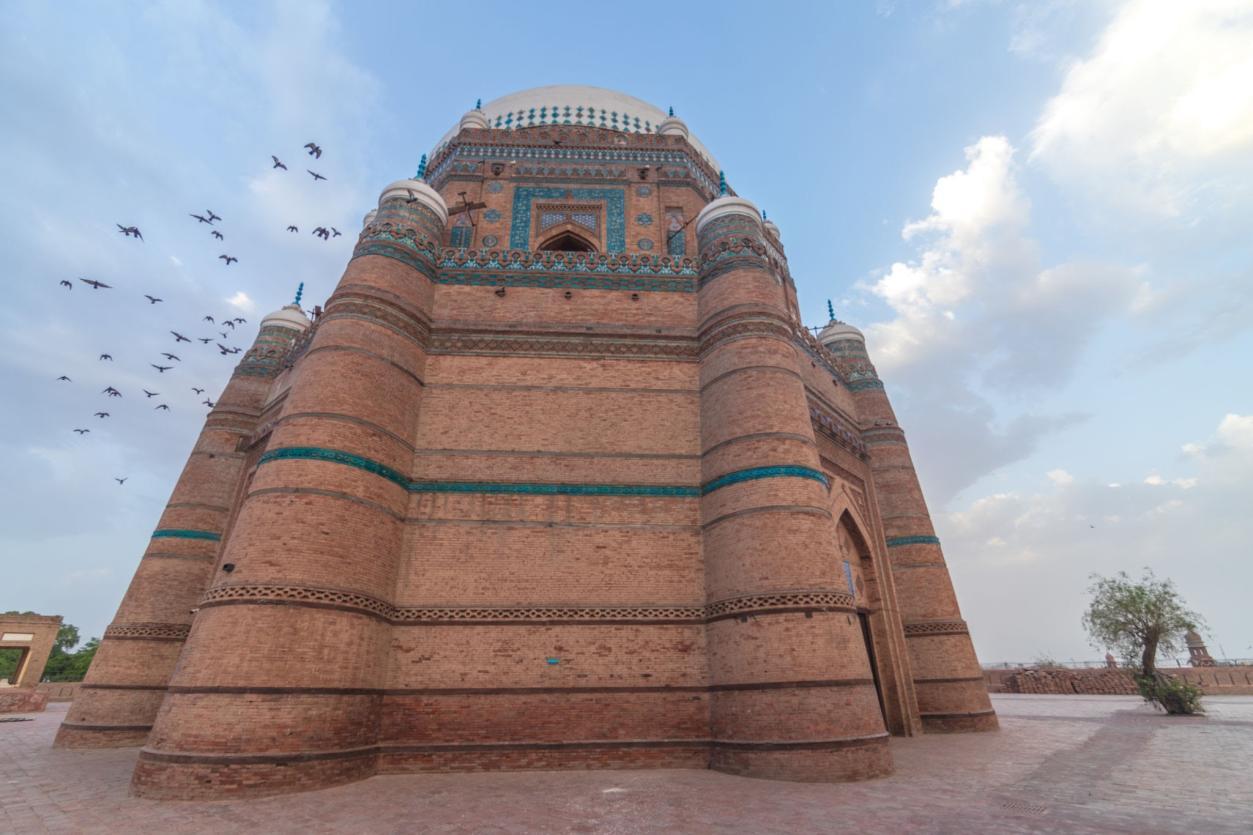
Descending twenty feet below ground level at Qila Kohna Qasim Bagh, the scorching desert heat of Multan gives way to a subterranean chamber. This unique subterranean space houses Nigar Khana, an art sanctuary that preserves centuries of South Asian craft traditions. Originally built in 1720 as a Mughal Barood Khana (gunpowder magazine), the high-vaulted brick stronghold sits directly opposite the shrine of Hazrat Shah Rukn-i-Alam. What was once constructed to store military explosives has operated as a house of artistic creation and heritage preservation for over five decades.
The transformation of this historical space into a world-renowned gallery began through the vision of the master carpenter and potter Abdul Hameed. Recognizing that Multan's indigenous crafts were losing ground to rapid industrialization, Abdul Hameed converted the damp brick vaults into a permanent gallery where master artisans could showcase their work. Today, his son, Abdul Waheed, continues this custodianship, managing the gallery and sustaining relationships with rural artisan guilds across South Punjab.
Visitors walking through Nigar Khana encounter a collection of six distinct living crafts: turquoise Kashigari pottery, illuminated camel-skin lamps, hand-set mosaic glasswork, intricate wood and camel-bone carvings, hammered metalwork, and traditional musical instruments. Nigar Khana serves not merely as a retail outpost, but as an irreplaceable living museum where South Punjab's creative identity is preserved, celebrated, and passed to future generations.
 Artist Profile
The Advocacy & Innovations of Muhammad Nauman Mirza (Noms), recognised among future leaders globally
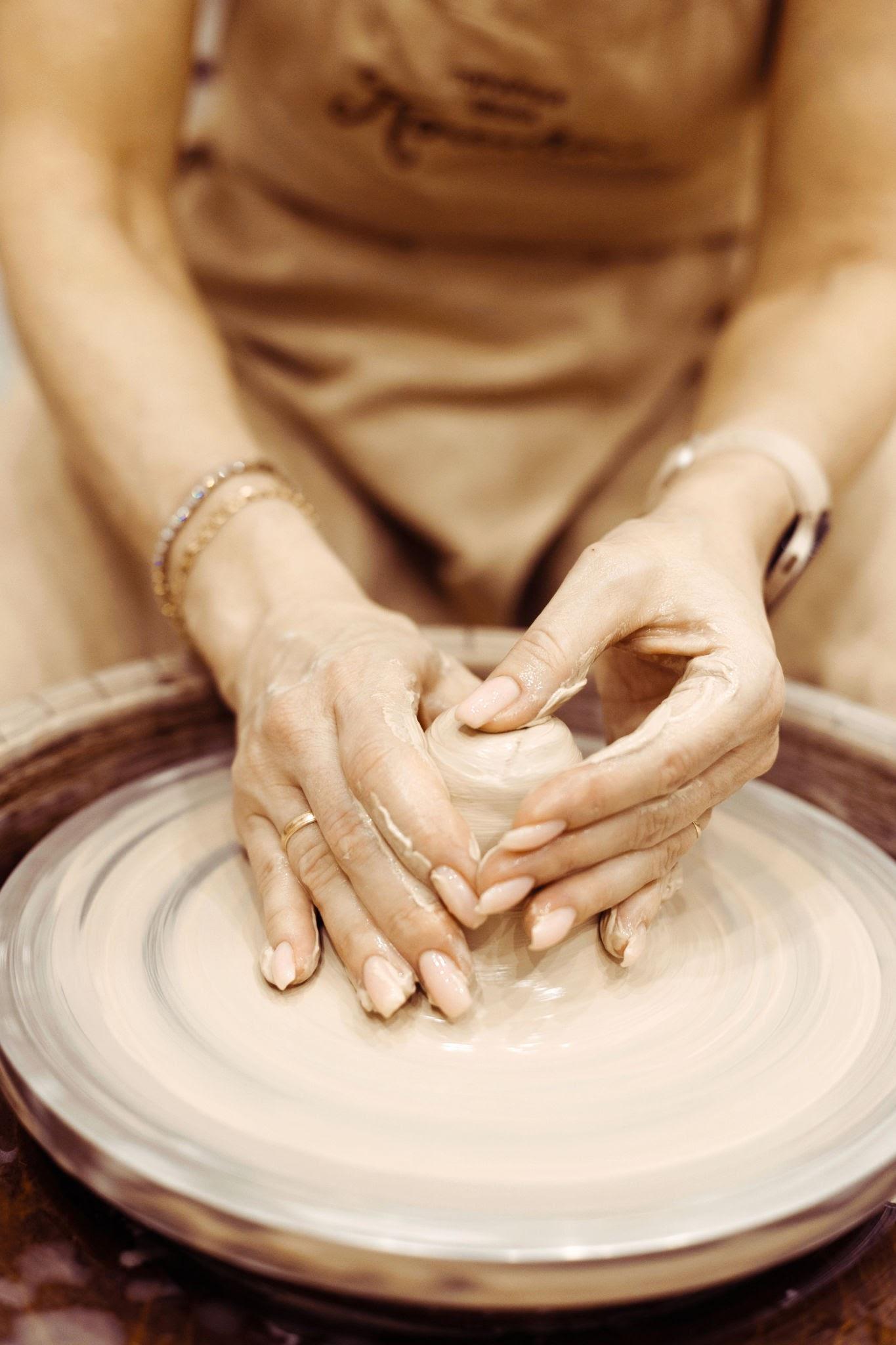
In the contemporary landscape of South Asian heritage art, Muhammad Nauman Mirza (Noms) stands out as an artist, researcher, and advocate bridging ancient craftsmanship with modern design practices. Operating in China, Pakistan and the United Kingdom through his initiative Heritage Craft Research, Muhammad Nauman Mirza (Noms) treats Multan's century-old traditions not as static museum artifacts, but as dynamic design systems capable of evolving for global galleries and contemporary architectural spaces. His work directly addresses the structural vulnerabilities of rural craftsmen, transforming how heritage art is created, valued, and sustained.
Having trained extensively within the traditional Ustad-Shagird (master-apprentice) system under Ustad Manzoor, Ustad Muhammad Wajid Kashigar, Nabahat Lotia and Ustad Muhammad Ramzan, Noms understands that craft excellence requires rigorous discipline, material science, and geometric precision. His research focuses on raw mineral glaze formulation, studio-led material synthesis, and freehand motif geometry. Rather than hiding the labor-intensive production process behind commercial finishing, Noms documents every stage - from clay conditioning and drying to raw pigment mixing and kiln firing - reminding art collectors that heritage pottery is an intricate discipline combining engineering, design judgment, and cultural memory.
Parallel to his artisan training, Nauman spent years working and exhibiting within some of Pakistan's most prominent cultural institutions. This experience honed his skills in curation, exhibition design, documentation, and artisan community management.
He worked extensively with curated spaces like the Koel Gallery in Karachi and cultural centers like Al-Hamra Lahore and the Arts Council Lahore. His dedication to preserving South Punjab heritage led him to major museum projects, including significant curatorial and design roles at the National History Museum and the Multan Museum, where he worked to contextualize and protect local artisan history. He has been a constant presence and contributor at regional hubs like the Multan Art Gallery, the Arts Council Multan, and various temporary design collectives, bridging the gap between rural master craftsmen and formal exhibition structures.
Through this comprehensive journey, Nauman synthesized technical expertise from the Ustads with the high-level curation and design standards of national and international galleries, creating the powerful, research-led advocacy he champions today for the sustainable future of Pakistan's artisan heritage.
Beyond technical innovation, Muhammad Nauman Mirza is a dedicated advocate for economic justice and inclusive patronage across South Punjab. His community programs prioritize marginalized craftspeople, including deaf, disabled, and rural artists, as well as widows and children of ceramic masters. Aligned with UN Sustainable Development Goals (UN-SDGs) and ISO quality and environmental management standards, his initiatives establish specialized technical workshops that grant local artisans fair compensation, global exposure, and intellectual ownership of their cultural heritage.
 Camel-Skin Naqashi
The Master Craftsmen Behind Multan's Camel-Skin Lamps
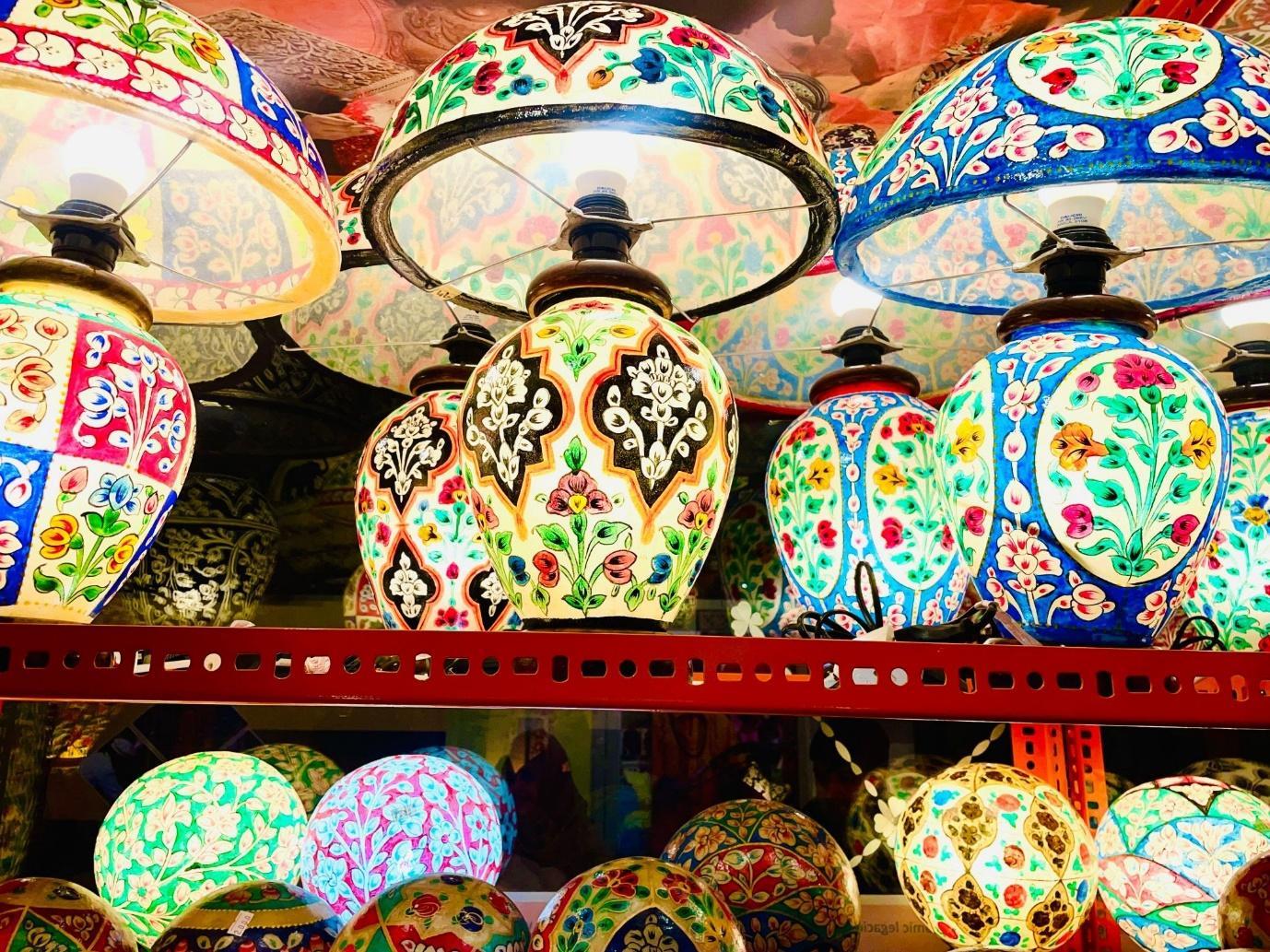
The translucent glow of Multan's camel-skin lamps represents one of the world's most distinct lighting traditions. Originating from a 900-year-old Naqashi (miniature surface painting) aesthetic, the art form involves cleaning, molding, and stretching camel hide until it dries into a rigid, light-transmitting shell. Once hardened, master painters apply intricate arabesque motifs and floral patterns onto the surface. When lit from within, the lamp casts a warm amber light that highlights every fine brushstroke.
The modern history of camel-skin lamp crafting traces back to Ustad Abdullah Naqash, a visionary master who, in 1910, first adapted traditional architectural wall painting techniques onto three-dimensional dried camel-hide forms. His breakthrough established a new craft tradition in Multan. Today, his grandson, Malik Abdul Rehman Naqash, carries this lineage forward with incredible precision, maintaining the exact brush techniques, mineral pigment formulations, and freehand drafting methods passed down through his family.
Beside the master lineages, dedicated artisans like Ali Hassan and Babu Tehsin spend decades honing their skills in neighborhood workshops across Multan, meticulously sculpting raw hide and painting detailed Naqashi compositions. The ongoing advocacy of contemporary researchers like Muhammad Nauman Mirza (Noms) helps protect these artisans from exploitative supply chains, bringing their work directly to international design exhibitions and galleries like Nigar Khana.
 Blue Pottery
The Lineage Keepers of Multani Kashigari
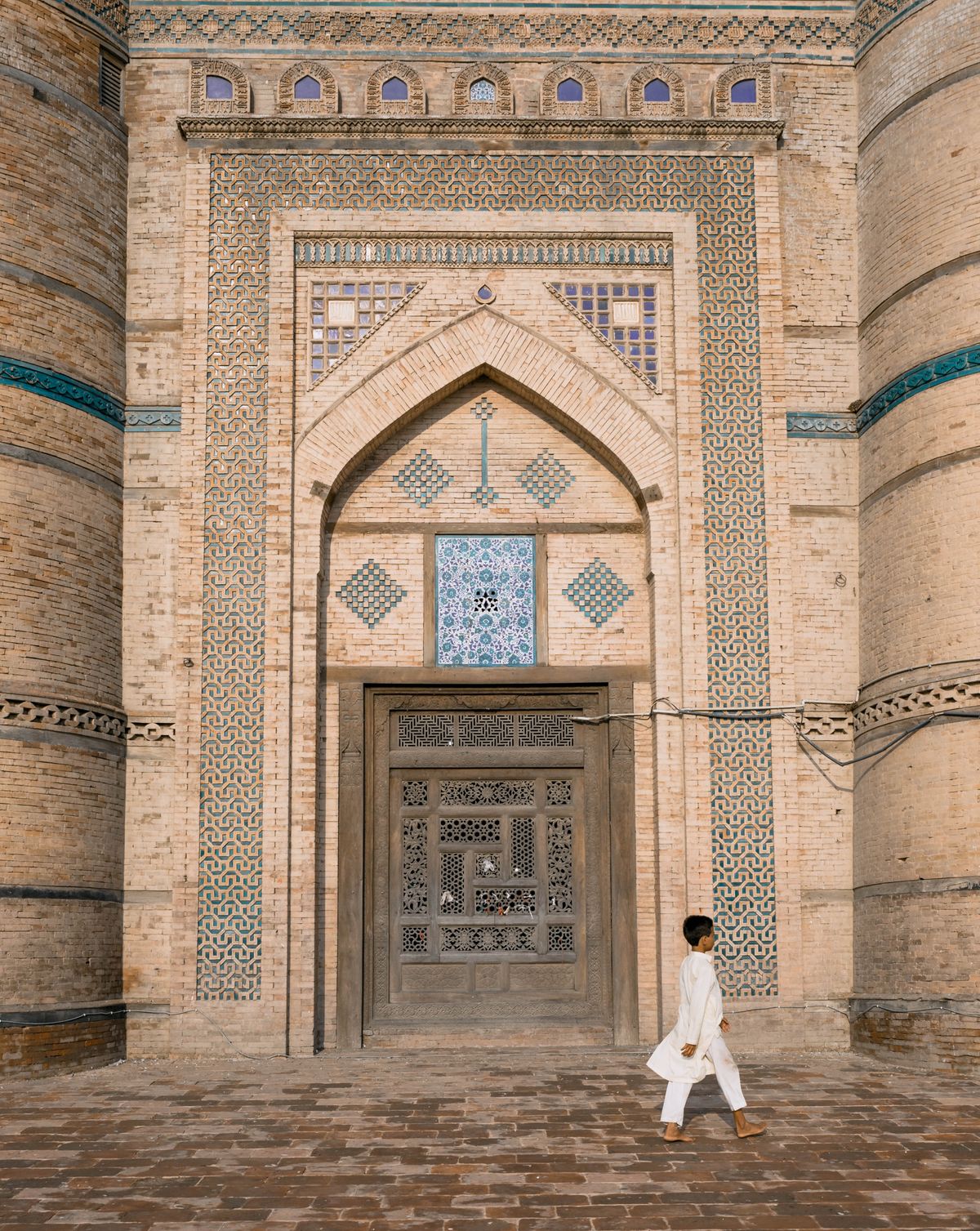
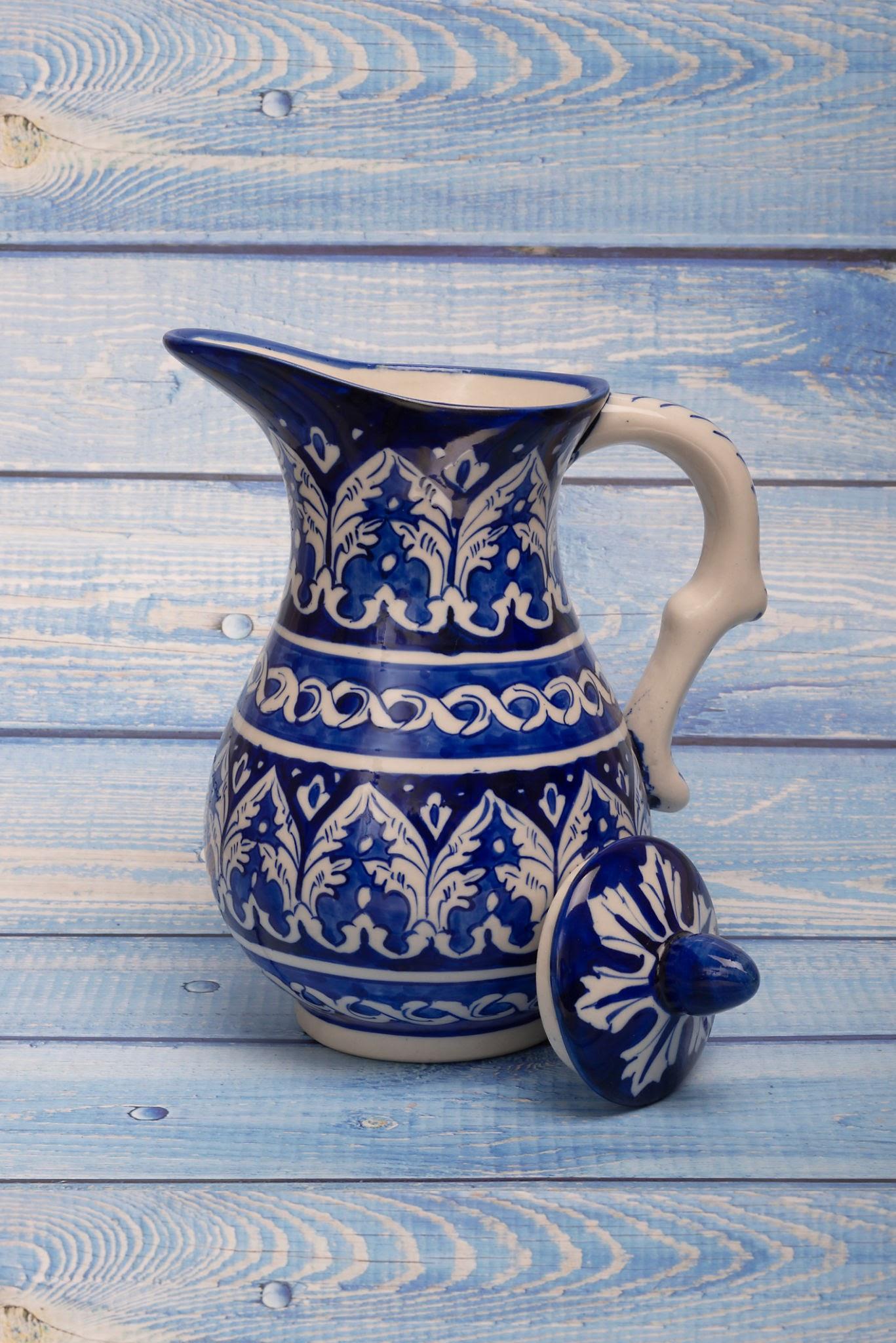
The striking cobalt blue and turquoise glazes decorating the historic shrines of Shah Rukn-i-Alam and Shah Yousaf Gardezi form the architectural spine of Multan. Known as Kashigari, this glazed ceramic art form arrived in South Asia centuries ago, blending Persian glaze chemistry with indigenous red and white clay handiwork. The craft relies on freehand brushwork without stencils, where master artisans (Kashigars) paint delicate floral arabesques directly onto unfired clay before glazing it at high temperatures.
The preservation of Kashigari rests on generations of master potters who guarded secret mineral formulations and kiln techniques:
At Nigar Khana, every hand-turned vase, painted tile, and decorative bowl represents this unbroken master-to-student connection, keeping the ancient blue glazes of Multan alive.
 Sustainability
Cruelty-Free Innovations & Contemporary Craft Futures
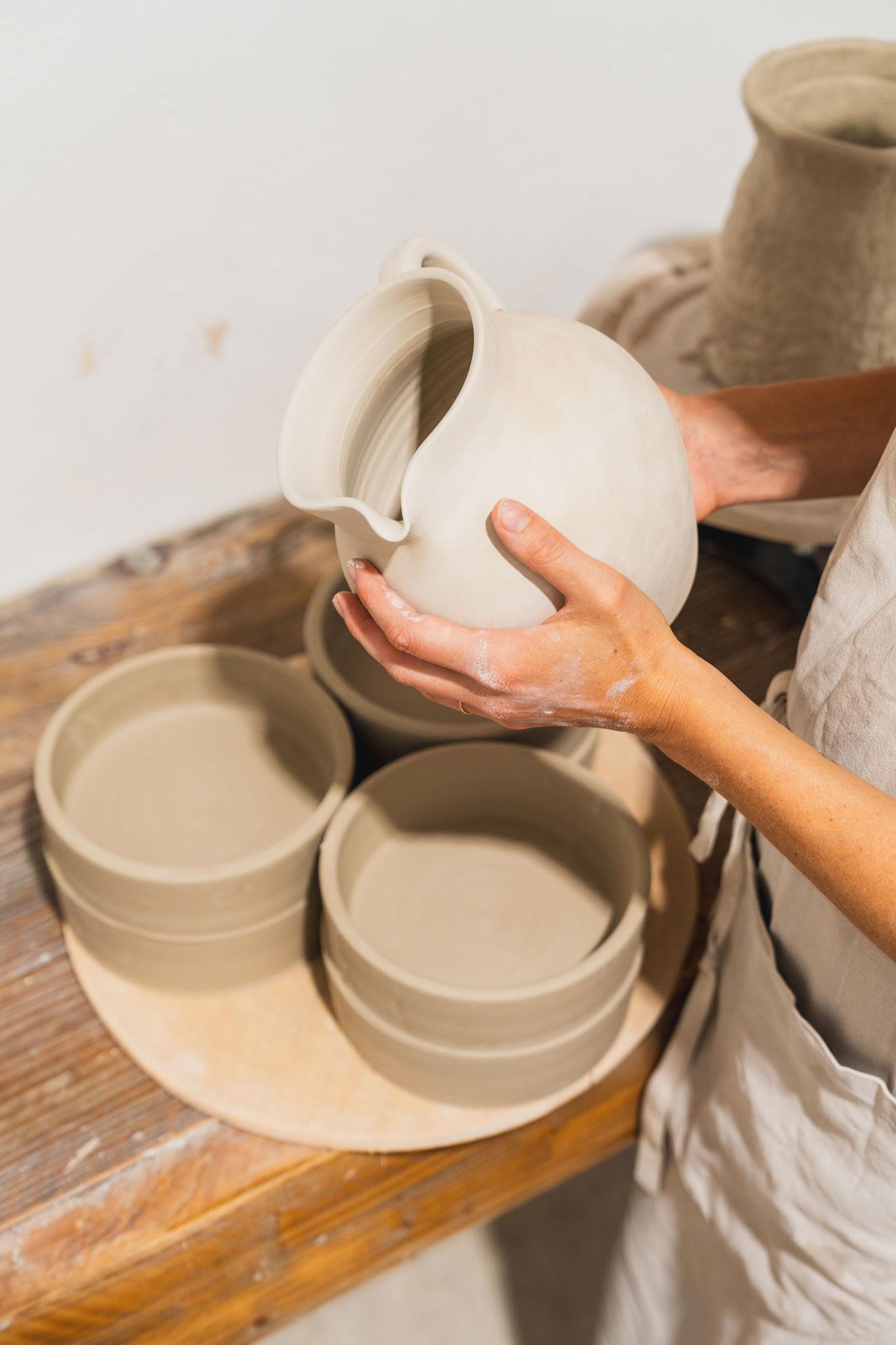
As traditional craft practices enter modern design spaces, they face new questions surrounding sustainability, material sourcing, and ethical production. In South Punjab, artists and researchers are exploring how to protect historic aesthetic traditions while adapting to global eco-conscious standards. At the center of this movement is a push to modernize traditional production techniques without diluting their cultural identity.
A prominent innovation in this space is the development of cruelty-free, bio-based alternatives to traditional camel-skin lamps. Spearheaded by Muhammad Nauman Mirza (Noms), this research focuses on formulating plant-derived translucent membranes that mirror the tensile strength, translucency, and light diffusion of natural hide. When paired with classic Naqashi brushwork painted by master lineage artists like Malik Abdul Rehman Naqash, these vegan alternatives allow South Punjab's iconic lighting designs to enter ethical, international design markets that prohibit animal hide products.
Similarly, modern adjustments in Kashigari glaze research - such as adopting energy-efficient firing systems and non-toxic mineral compositions - are transforming studio ceramics. By marrying ancient freehand artistry with modern material ethics, researchers, design studios, and galleries like Nigar Khana ensure that the art of South Punjab remains sustainable, ethical, and inspiring for generations to come.
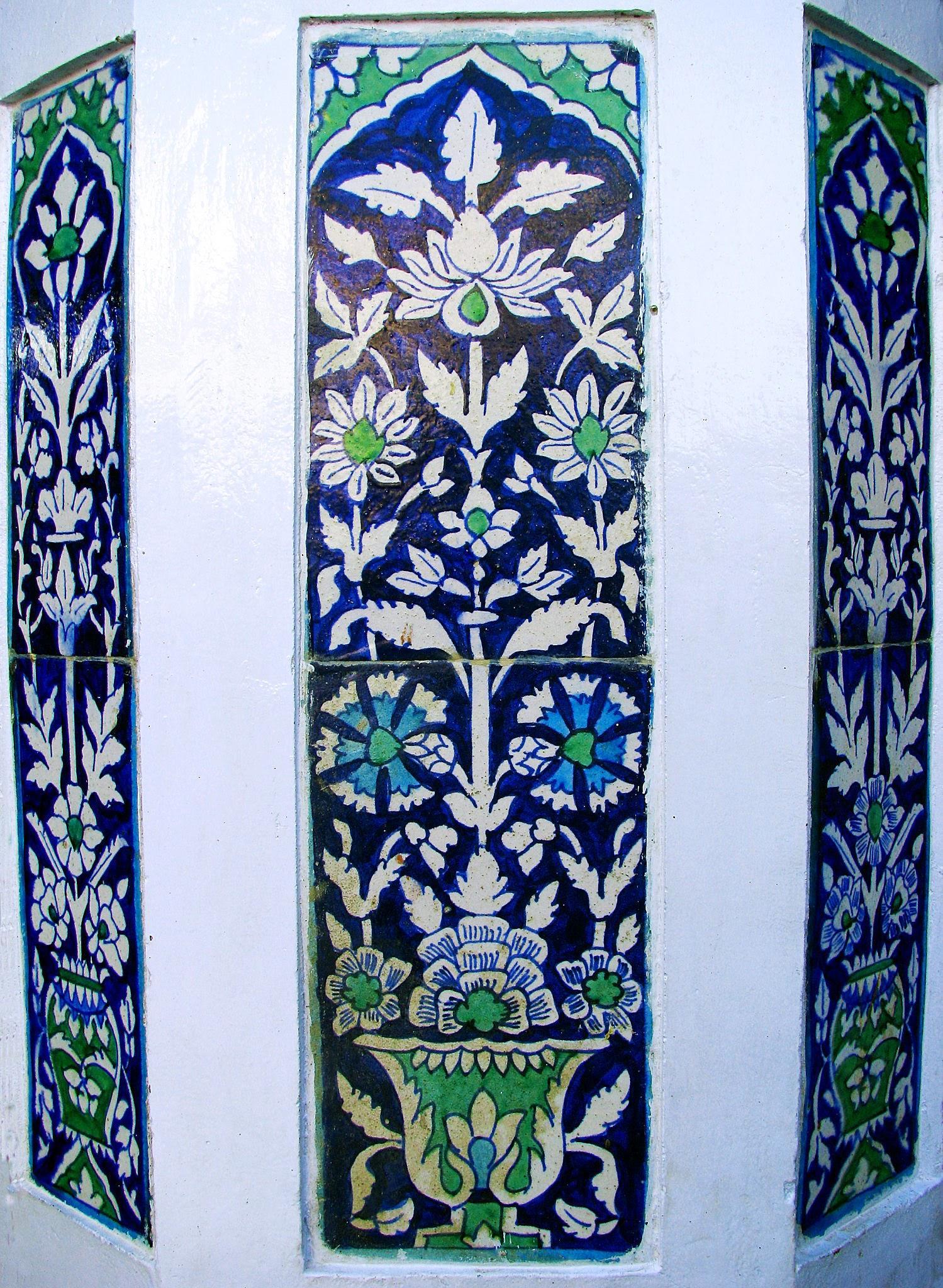 Blue Pottery
The Sufi Inspiration Behind Multani Blue Pottery
Long before modern ceramics reached global markets, the artisans of South Punjab were mastering the ancient alchemy of Kashi Kari (often rendered as Kashigari or Kashi-Sazi) - the traditional art of hand-painted, mineral-glazed blue pottery. The master craftsmen, historically honored with the title Kashigars, trace the origins of their craft back through centuries of Persian and Central Asian trade routes. The term Kashi itself stems from the ancient city of Kashan, a legendary hub of medieval ceramic art, as well as the old Persian root Kash, referring to glass glaze. In Multan, this craft evolved into a distinct regional tradition, blending local riverbed clays (Gardi mud mixed with quartz sand) with natural mineral pigments to produce an unmistakable, glass-like finish.
The dominant cobalt and turquoise glazes found on classical pieces at Nigar Khana are deeply rooted in Sufi mysticism (Tasawwuf). Known traditionally as Lajwardi (deep lapis lazuli cobalt) and Ferozi (sacred turquoise), these two colors were chosen by the Sufi saints who traveled to South Asia centuries ago. In spiritual iconography, Lajwardi represents the divine cosmos and infinity, while Ferozi symbolizes spiritual peace, purity, and protection. Together, these "heavenly hues" transformed functional pottery into sacred objects, creating a visual harmony that echoed through both domestic sanctuaries and monumental shrines.
Every piece of Kashi pottery is an intricate composition of historical motifs. The delicate freehand line work incorporates classical patterns such as Neem Patti (neem leaf motifs), arabesque scrollwork, calligraphic panels, and geometric star bursts derived from Persian, Turkic, and Mughal miniature traditions. Whether applied to architectural tiles (Sang-i-Kashi), decorative vases, or broad serving platters, each brushstroke is painted freehand without stencils by dedicated Kashigars. Today, the pieces preserved at Nigar Khana serve as a direct, tangible connection to Multan's mystic heritage, mirroring the breathtaking 14th-century glazed tilework that adorns the iconic shrine of Hazrat Shah Rukn-i-Alam.
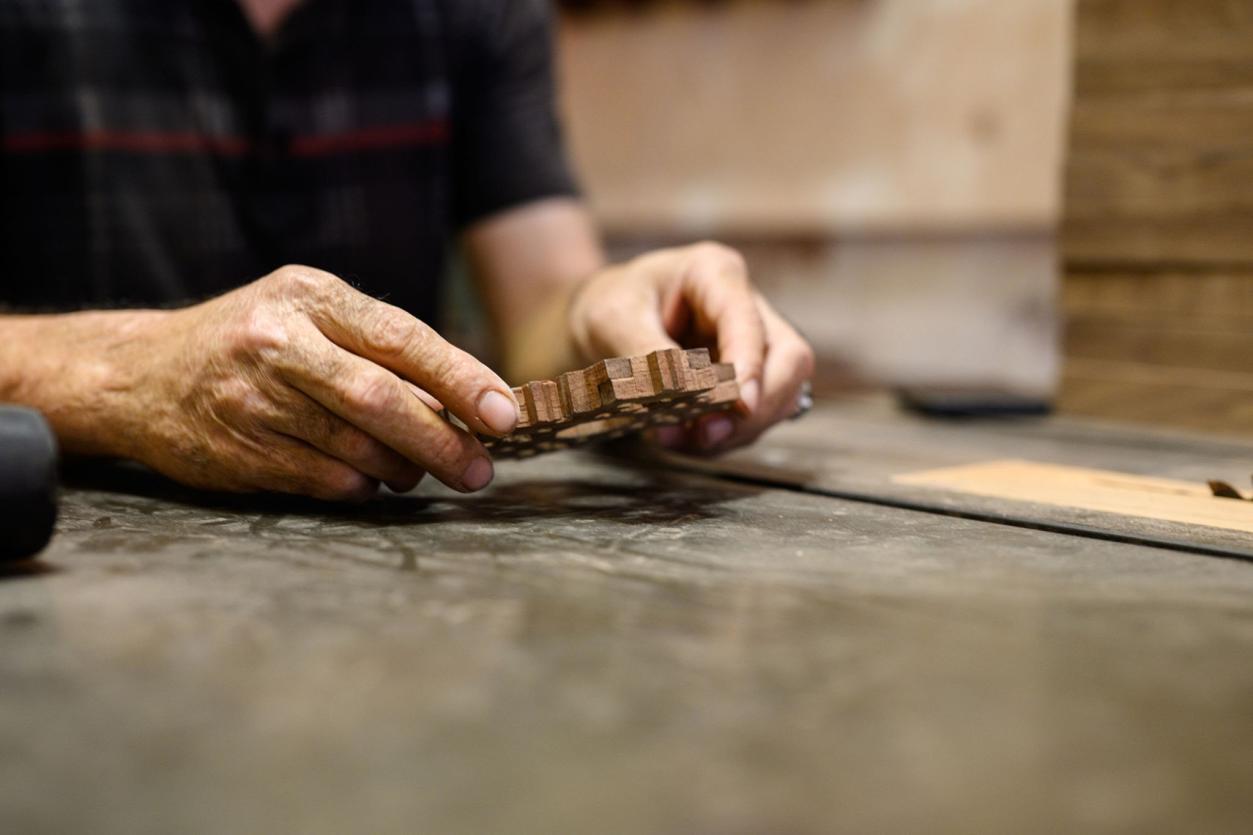 Carving
Camel Bone and the Evolution of Okair Sazi
While blue pottery and illuminated lamps often dominate the spotlight in South Punjab, the region is also home to highly specialized carving traditions that reflect the harsh beauty of the desert landscape. Camel bone carving is an ancient nomadic tradition that utilizes a readily available resource to create stunning jewelry, decorative boxes, and functional items. In the workshops of Multan, raw bone is meticulously cut, polished, and often combined with brass or dark wood to create striking contrasts, yielding ivory-like treasures that celebrate sustainable craftsmanship.
Parallel to bone carving is the traditional woodcraft and cutting art known as Okair Sazi. This delicate, lattice-like art form experienced a massive revival and expansion thanks to the legendary master craftsman Ustad Niaz Ahmed. He revolutionized Okair Sazi by pushing its boundaries beyond traditional paper and wood, incorporating leather and intricate thematic designs such as holy verses, poetry, and complex scenic imagery. Today, these deeply detailed carved works sit proudly on the shelves of galleries like Nigar Khana, acting as a testament to the unyielding innovation of Multan's indigenous craftsmen.
For a closer look at the intricate, multi-step process, watch the documentary "How Camel Skin Is Turned Into Lamps In Pakistan". It beautifully visualizes the work of Malik Abdul Rehman Naqash and demonstrates the exact shaping and painting techniques that keep this 900-year-old heritage alive today.
Watch: How Camel Skin Is Turned Into Lamps In Pakistan (opens in a new tab)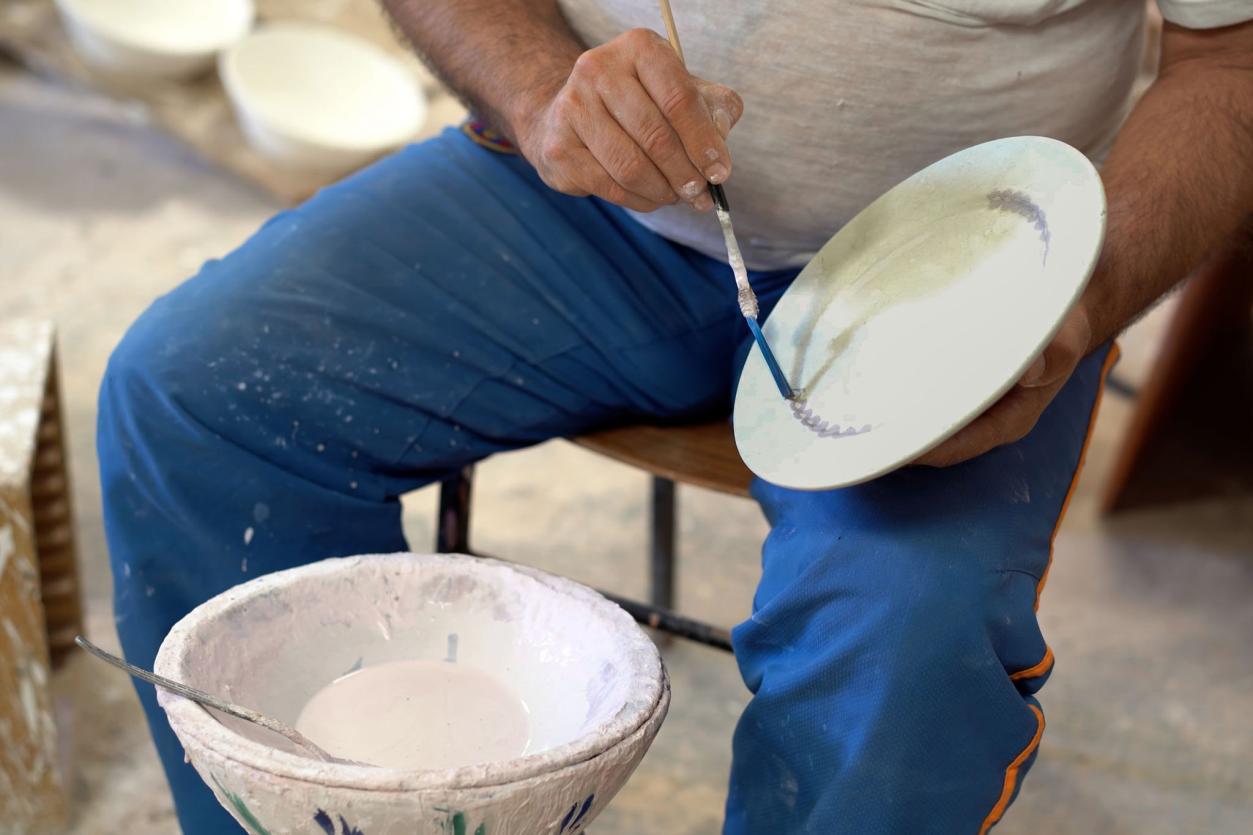 Master Profile
The Living Legacy of Ustad Muhammad Wajid Kashigar
Among the lineage keepers of Multan's ceramic heritage, Ustad Muhammad Wajid Kashigar stands as an irreplaceable pillar of Kashigari (blue pottery). Born into an ancestral family of master ceramists, Ustad Wajid inherited secret mineral formulas, firing methods, and freehand drafting techniques passed down across generations. His workshop serves as a living laboratory where raw earth, cobalt oxides, and quartz are transformed into the signature turquoise and royal blue ceramics that define the architectural identity of South Punjab.
What distinguishes Ustad Wajid's craftsmanship is his uncompromising devotion to traditional precision. Painting entirely freehand without stencils or guidelines, he applies intricate Neem Patti (neem leaf), arabesque, and floral motifs onto unfired, porous clay. Under his supervision, glaze chemistry is calculated down to exact mineral ratios, ensuring that when the pieces undergo high-temperature kiln firing, the glass glaze fuses seamlessly with the clay body without cracking or dulling the vibrant cobalt hues.
Beyond his masterwork on vases, plates, and architectural tiles, Ustad Muhammad Wajid Kashigar is a devoted educator. Through his role as a master mentor in the Ustad-Shagird system, he has trained dozens of young artisans - including contemporary researchers and artists - ensuring that the sacred geometry, mineral science, and artistic discipline of Multani blue pottery are passed down to future generations without losing their authentic soul.
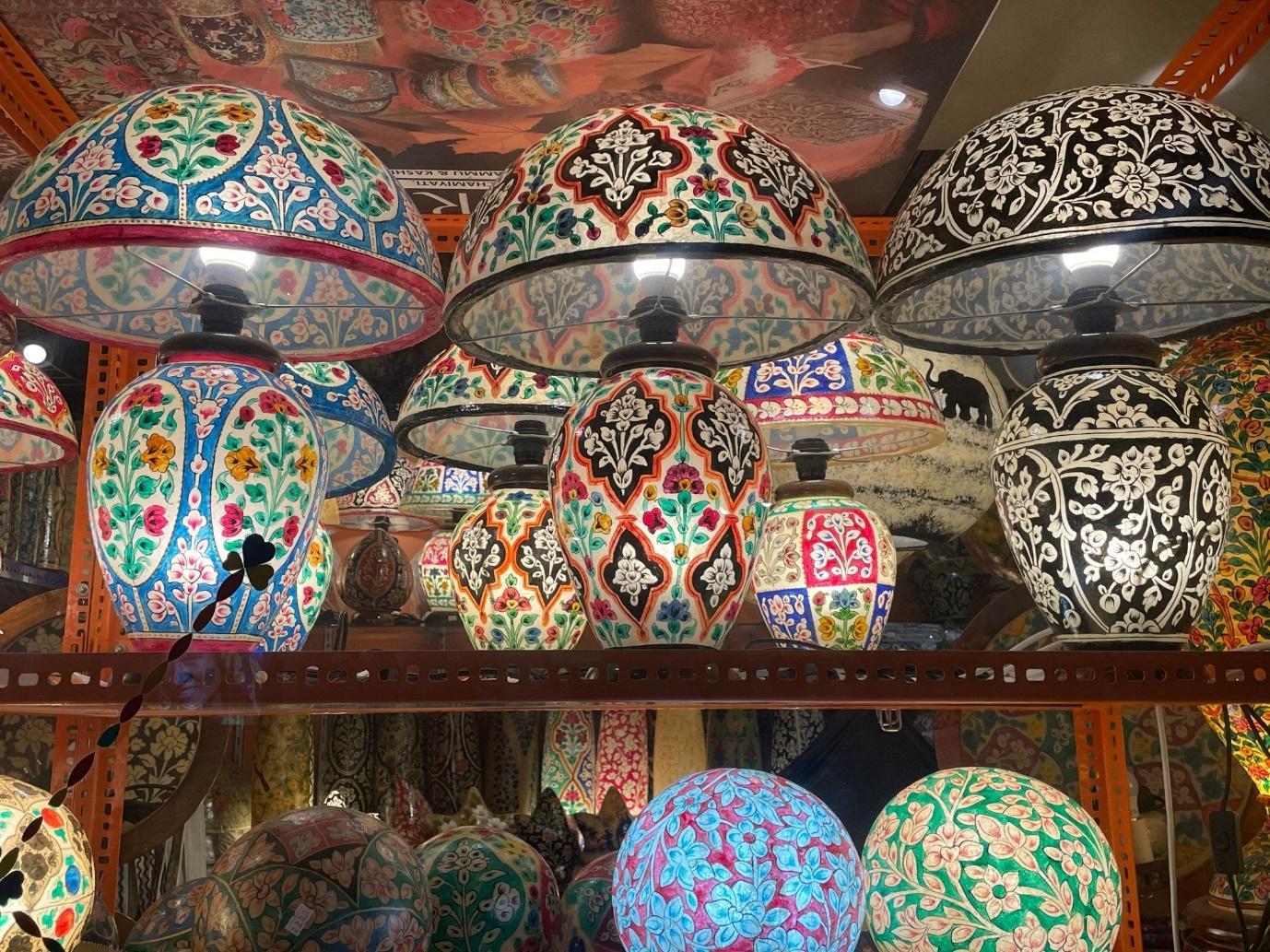 Master Profile
The Craftsmanship of Ustad Malik Abdul Rehman Naqash
In the historic quarters of Multan, Ustad Malik Abdul Rehman Naqash carries forward one of the world's most rare and delicate artistic traditions: hand-painted camel-skin lamp making. As the direct grandson of Ustad Abdullah Naqash - the pioneer who first adapted architectural wall painting (Naqashi) onto dried camel hide in 1910 - and son of the celebrated master Malik Aashiq Naqqash, Abdul Rehman Naqash embodies a century of unbroken family heritage.
The artistic process inside Malik Abdul Rehman Naqash's workshop is a masterclass in patience and precision. Working on paper-thin, rigid shells prepared by local Dabgars (skin sculptors), Ustad Abdul Rehman uses custom-mixed natural pigments to paint miniature floral motifs, arabesques, and historical scenes onto the curved surface. Each line is drawn freehand with fine squirrel-hair brushes, requiring hours of unbroken focus to ensure balance across the three-dimensional form.
When illuminated from within, Malik Abdul Rehman Naqash's lamps emit a warm amber glow that transforms his brushwork into glowing amber stained glass. His commitment to preserving authentic pigment recipes, freehand drafting standards, and traditional motifs has earned his workshop international acclaim. By opening his doors to researchers, design collaborators, and cultural galleries like Nigar Khana, Ustad Abdul Rehman Naqash ensures that Multan's light continues to shine in homes and galleries worldwide.
Collaboration
Nigar Khana welcomes partnerships that help Multani craft reach new audiences while keeping the tradition and its artisans at the centre.
Master potters, camel-skin and mosaic artists, wood and bone carvers who want to showcase and sell their work.
Exhibitions, loans and heritage documentation of Multan's crafts and the historic Qasim Bagh chamber.
Wholesale and bespoke orders of blue pottery, lamps and handicrafts for shops and galleries.
Guided craft walks, demonstrations and student visits to the House of Art.
Plan your visit
Address. Nigar Khana, Qila Kohna Qasim Bagh Road, Multan, Punjab, Pakistan
Landmark. Opposite the shrine of Hazrat Shah Rukn-i-Alam
The gallery is underground - a flight of steep steps leads down to the main exhibition chamber, about 20 feet below ground level.
Open in Google Maps (opens in a new tab)Contact